 ChipApex | Global Electronic Components Supplier
SEARCH
Search Product
Search Post
— IC芯片 | 连接器 | 传感器 | 被动器件 —
Search productSearch post
— IC芯片 | 连接器 | 传感器 | 被动器件 —
Consult the customer manager about the wholesale price.
consultation hotline:86-132-6715-2157
email:[email protected]
Contact the product manager for consultation. One-stop consultation is available.
Do you want a lower wholesale price? Please send us your inquiry and we will reply immediately.
The QT60040-D is a CMOS charge-transfer IC designed for matrix touch controls, supporting up to four keys in a 4x1 configuration. It operates on a single power supply ranging from 2.5V to 5.5V with typical supply currents of 0.6mA at 3V and 0.65mA at 5V. The device features four active-high outputs capable of sensing up to two simultaneous key touches. It requires only one external sampling capacitor (Cs), typically between 22nF and 220nF, for operation. The component includes self-calibration, drift compensation, and detection integration algorithms to ensure stability under varying environmental conditions.
Verify the specific suffix 'D' corresponds to the required operating temperature range of 0°C to +70°C. Confirm package type requirements against the datasheet specifications. Ensure the design accommodates the necessary external components, specifically the Cs capacitor and bypass capacitors, as detailed in the circuit specifics section.
Select this component when a low-component-count solution for multi-touch detection is required. The 4x1 matrix architecture minimizes interconnect complexity compared to per-key sensor designs. Consider the -D suffix if the application environment remains within standard commercial temperature limits rather than the extended industrial range.
The QT60040 utilizes Quantum's patented transverse charge-transfer method to detect capacitance changes across an XY electrode matrix. This approach reduces the number of scan lines and external components needed compared to traditional technologies. The device processes signals internally to filter noise and compensate for environmental drift, allowing for robust performance in sealed or harsh environments.
Publicly confirmed substitute part numbers are not available in the provided documentation. Designers should evaluate other QMatrix series ICs based on channel count and package compatibility if replacement is necessary.
The device can sense up to two keys simultaneously by default. If three or more keys are touched, it limits the output to the first two detected. This behavior can be restricted to a single key using the OPT1 pin.
Sensitivity is primarily determined by the value of the external sampling capacitor (Cs) and the geometry of the interdigitated electrodes. Increasing the Cs value generally increases sensitivity, though optimal values depend on panel material and thickness.
The device includes a Max On-Duration feature that monitors detection time. If a key remains detected for a set period (configurable to 10 or 60 seconds via the OPT2 pin), the device performs a full recalibration to reset the state.
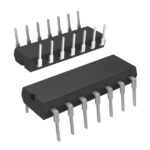 QT60040-D
The activity of extra discounts on wholesale prices is in full swing…
Please fill in your contact information and we will send you the latest wholesale price list.





