 ChipApex | Global Electronic Components Supplier
SEARCH
Search Product
Search Post
— IC芯片 | 连接器 | 传感器 | 被动器件 —
Search productSearch post
— IC芯片 | 连接器 | 传感器 | 被动器件 —
Consult the customer manager about the wholesale price.
consultation hotline:86-132-6715-2157
email:[email protected]
Contact the product manager for consultation. One-stop consultation is available.
Do you want a lower wholesale price? Please send us your inquiry and we will reply immediately.
The QT60486-ASG is a 48-key QMatrix touch controller utilizing transverse charge-transfer sensing. It supports up to 48 keys via an 8x6 matrix grid, penetrating dielectrics up to 50mm thick. The device features SPI and UART interfaces for host communication and configuration. Key parameters include individual sensitivity adjustment, adaptive auto-calibration, and spread-spectrum modulation for noise immunity. It operates within a temperature range of -40°C to +105°C and is housed in a 44-pin TQFP package.
Verify the specific ordering suffix against the manufacturer's current documentation to confirm pinout compatibility and environmental ratings. Ensure the component source is authorized to guarantee authenticity and traceability. Cross-reference the datasheet revision date with your design requirements to confirm feature alignment.
Select this model when a high-density touch interface exceeding 32 keys is required. It is suitable for applications demanding sealed, watertight control panels resistant to vandalism and environmental factors. Consider the 8x6 matrix constraint and ensure the host system can support the necessary SPI or UART communication protocols for setup and data retrieval.
This component belongs to the Quantum Research Group QMatrix family of digital charge-transfer sensors. It shares functional similarities with the QT60326 but offers expanded capacity for 48 keys instead of 32. Both variants utilize the same underlying sensing architecture and interface protocols, differing primarily in the maximum number of scan lines and keys supported.
The QT60326 serves as a lower-capacity alternative within the same series, supporting up to 32 keys. Verify that the application does not require more than 32 active keys before substituting. Pinouts and software commands remain largely compatible, though key mapping tables must be adjusted accordingly.
The QT60486-ASG employs adaptive auto self-calibration that runs continuously to compensate for drift caused by temperature changes or panel aging. Setup configurations are stored in onboard EEPROM, eliminating the need for reloading upon power-up.
The device can detect touch through dielectric materials such as glass, plastic, stone, ceramic, or wood with thicknesses up to 50mm (5 cm).
Yes, the device allows for arbitrary key sizes and shapes to be mixed within a single panel. Key surface areas can vary by a factor of 20:1, and the internal electrode pattern can be tailored to the desired graphical key area.
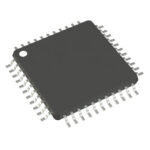 QT60486-ASG
The activity of extra discounts on wholesale prices is in full swing…
Please fill in your contact information and we will send you the latest wholesale price list.







