ChipApex | Global Electronic Components Supplier
SEARCH
Search Product
Search Post
— IC芯片 | 连接器 | 传感器 | 被动器件 —
Search productSearch post
— IC芯片 | 连接器 | 传感器 | 被动器件 —
Consult the customer manager about the wholesale price.
consultation hotline:86-132-6715-2157
email:[email protected]
Contact the product manager for consultation. One-stop consultation is available.
Do you want a lower wholesale price? Please send us your inquiry and we will reply immediately.
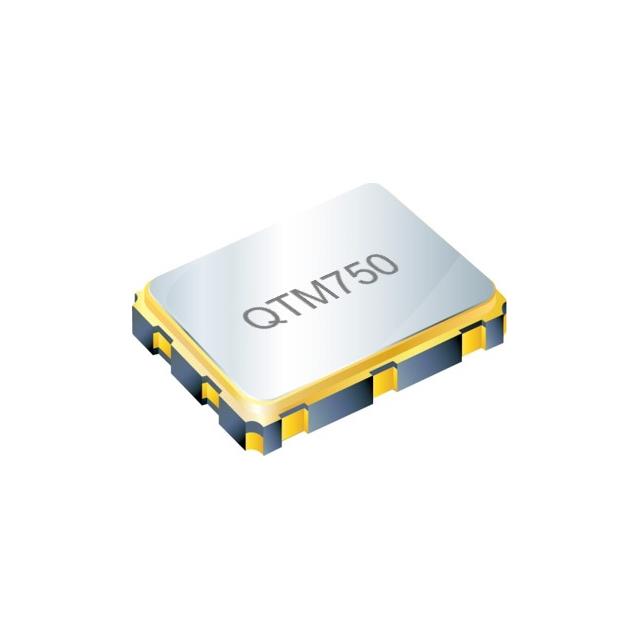
The QTM750-24.576MBE-T is a standard CMOS quartz oscillator manufactured by QST, designed for surface-mount applications. It operates at a nominal frequency of 24.576 MHz with a frequency stability of ±50 ppm across the industrial temperature range of -40°C to +85°C. The device requires a 3.3V DC supply voltage and features an Enable/Disable control function. It is housed in a compact 4-SMD, No Lead package with body dimensions of 7.0mm x 5.0mm x 1.3mm. The output signal is compatible with CMOS logic levels, making it suitable for digital clock generation in various electronic systems.
Verify the manufacturer designation carefully, as the model number appears in listings associated with both QST and TXC Corporation. Confirm the specific datasheet version matches the required pinout and electrical characteristics. Ensure the order quantity aligns with the reel packaging specifications typically found in distributor catalogs. Check regional availability restrictions before finalizing procurement plans.
Select this component when a 24.576 MHz clock source is required with CMOS output compatibility. The ±50 ppm stability specification suits general-purpose timing applications rather than high-precision requirements. Consider the 3.3V operating voltage constraint against the target system's power rails. The enable/disable feature offers flexibility for power-sensitive designs requiring clock gating capabilities.
This oscillator belongs to the QTM750 series, which provides standardized surface-mount solutions for various frequency needs. The series includes multiple frequency options such as 10 MHz, 112 MHz, and 32.768 MHz, all sharing similar physical dimensions and electrical characteristics. This consistency simplifies inventory management and board layout processes for manufacturers utilizing different clock frequencies within the same product line.
Public confirmed substitute part numbers are not available in the provided documentation. Cross-referencing with other manufacturers requires verifying identical frequency, package size, voltage, and output type specifications.
 QTM750-24.576MBE-T
The activity of extra discounts on wholesale prices is in full swing…
Please fill in your contact information and we will send you the latest wholesale price list.