ChipApex | Global Electronic Components Supplier
SEARCH
Search Product
Search Post
— IC芯片 | 连接器 | 传感器 | 被动器件 —
Search productSearch post
— IC芯片 | 连接器 | 传感器 | 被动器件 —
Consult the customer manager about the wholesale price.
consultation hotline:86-132-6715-2157
email:[email protected]
Contact the product manager for consultation. One-stop consultation is available.
Do you want a lower wholesale price? Please send us your inquiry and we will reply immediately.
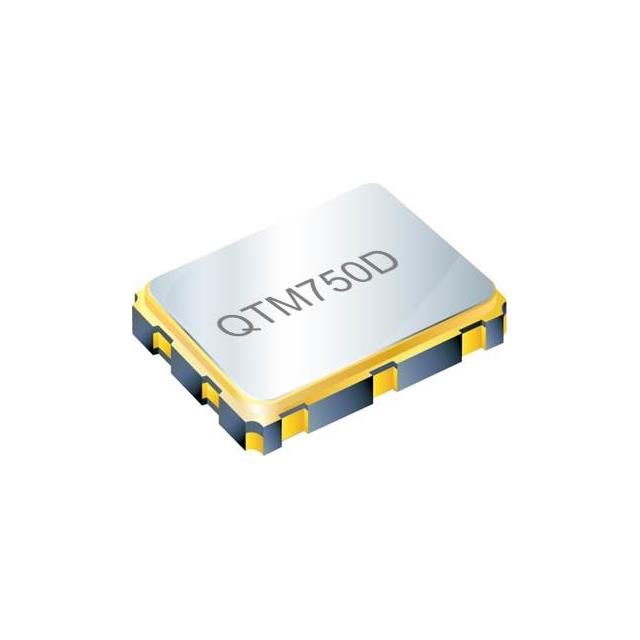
The QTM750D-150.000MBE-T is a standard clock oscillator manufactured by QST, designed for surface-mount applications. It operates at a nominal frequency of 150.000 MHz and utilizes LVDS output signaling. The device features a frequency stability of ±50 ppm and supports an operating temperature range from -40°C to +85°C. Maximum supply current is specified at 50 mA. The component is housed in a compact surface-mount package suitable for automated assembly processes.
Verify the specific manufacturer designation when sourcing, as similar part numbers may exist under different branding or legacy designations. Confirm that the LVDS output requirement matches the receiving logic family voltage levels. Ensure the thermal environment remains within the specified -40°C to +85°C operational limits to maintain the stated ±50 ppm stability. Cross-reference the footprint dimensions against the mechanical drawing provided in the official datasheet before finalizing the PCB layout.
Select this component when a low-jitter, high-frequency clock source is required for digital systems. The LVDS output provides noise immunity suitable for high-speed environments. Consider the 50 mA current consumption during power budget calculations. The wide temperature range makes it suitable for industrial or automotive-grade applications where environmental extremes are expected. Verify compatibility with the target system's voltage rails and load requirements.
This oscillator belongs to the QTM750 series, which offers various frequency options within a standardized surface-mount form factor. The 'D' suffix typically indicates specific packaging or pinout variations within the product line. It serves as a critical timing reference for microprocessors and FPGAs requiring precise clock edges. The series is engineered to replace discrete crystal resonators and external driver circuits, simplifying board design and reducing component count.
Direct substitutes include other QST oscillators from the same QTM750 family with matching frequency and output type. Verify pin-to-pin compatibility if swapping with equivalent parts from other manufacturers. Ensure that any alternative component supports the same LVDS swing and current drive capabilities to prevent signal integrity issues.
 QTM750D-150.000MBE-T
The activity of extra discounts on wholesale prices is in full swing…
Please fill in your contact information and we will send you the latest wholesale price list.