ChipApex | Global Electronic Components Supplier
SEARCH
Search Product
Search Post
— IC芯片 | 连接器 | 传感器 | 被动器件 —
Search productSearch post
— IC芯片 | 连接器 | 传感器 | 被动器件 —
Consult the customer manager about the wholesale price.
consultation hotline:86-132-6715-2157
email:[email protected]
Contact the product manager for consultation. One-stop consultation is available.
Do you want a lower wholesale price? Please send us your inquiry and we will reply immediately.
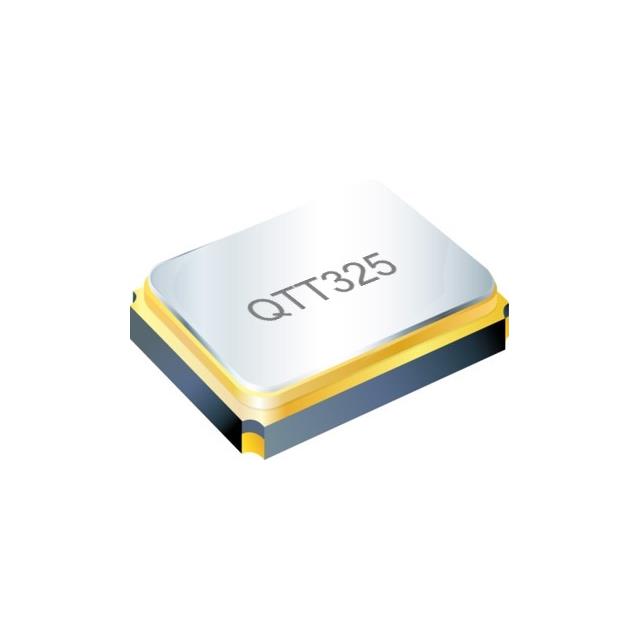
The QTT325-24.000MDN-T is a temperature-compensated crystal oscillator (TCXO) manufactured by QST, designed for surface-mount applications in the 4-SMD, No Lead package. It operates at a nominal frequency of 24 MHz with a standard XO output type. The component supports a supply voltage of 3.3V and features an enable/disable control function. It exhibits a frequency stability of ±50 ppm and draws a maximum supply current of 10 mA. The device is rated for operation across a wide temperature range from -40°C to +125°C, ensuring reliable performance in demanding environments.
Verify the manufacturer designation carefully as some distributor listings incorrectly attribute this part to TXC Corporation while official data identifies QST as the manufacturer. Confirm the specific suffix 'DN' corresponds to the required pinout and electrical characteristics for your design. Ensure the 3.3V supply requirement aligns with your system's power architecture before procurement.
Select this component when a compact TCXO solution is required for 24 MHz applications with strict size constraints. The 4-SMD package suits high-density PCB layouts. Consider the ±50 ppm stability specification against your system's jitter tolerance requirements. Verify that the 10 mA current consumption fits within your total power budget for battery-operated or thermally sensitive devices.
This oscillator belongs to the QTT325 series, which provides temperature-compensated solutions in a small form factor. It complements other QST oscillators like the QTM216E series but offers superior thermal stability compared to standard XO types. The 24 MHz frequency is commonly used in communication protocols and microcontroller clock sources where precision timing is critical for data integrity.
Public confirmed substitute part numbers are not available in the provided documentation. Direct replacement requires matching the 24 MHz frequency, 3.3V supply, 4-SMD package, and TCXO technology. Verify pin compatibility and thermal performance specifications before substituting with generic alternatives.
 QTT325-24.000MDN-T
The activity of extra discounts on wholesale prices is in full swing…
Please fill in your contact information and we will send you the latest wholesale price list.