 ChipApex | Global Electronic Components Supplier
SEARCH
Search Product
Search Post
— IC芯片 | 连接器 | 传感器 | 被动器件 —
Search productSearch post
— IC芯片 | 连接器 | 传感器 | 被动器件 —
Consult the customer manager about the wholesale price.
consultation hotline:86-132-6715-2157
email:[email protected]
Contact the product manager for consultation. One-stop consultation is available.
Do you want a lower wholesale price? Please send us your inquiry and we will reply immediately.
The RB088T100HZC9 is a Schottky barrier diode manufactured by ROHM Semiconductor, designed for automotive applications under the AEC-Q101 standard. It features a cathode common dual configuration housed in a TO-220FN (3PIN) leaded package. The device supports an average rectified forward current of 10A and a repetitive reverse voltage of 100V. Key electrical parameters include a maximum forward voltage of 0.87V at 15A and a maximum reverse current of 0.01mA at 100V. It operates with a junction temperature up to 150°C and a storage temperature range from -55°C to 150°C.
Verify component authenticity through authorized ROHM distributors or direct manufacturer channels. Confirm the specific suffix C9 matches project requirements as this variant may have distinct packaging or lot traceability attributes. Ensure compliance with RoHS directives and check for any obsolescence notices regarding new design recommendations before finalizing procurement plans.
Select this component for high-reliability automotive environments requiring robust Schottky rectification. The TO-220FN package facilitates effective thermal management for continuous 10A operation. Consider the 100V rating and low forward voltage drop for efficiency optimization in 12V or 24V automotive systems where low reverse leakage is critical for standby power conservation.
This part belongs to the RB088T series of automotive Schottky barrier diodes. It shares the same internal structure and performance profile as the RB088T-100HZ but includes the C9 suffix indicating specific manufacturing or packaging variations. The series is characterized by high reliability and low reverse current, making it suitable for demanding automotive electronic control units and power distribution modules.
Direct substitutes within the same family include RB088T-60HZC9 and RB088T150HZC9, differing primarily in reverse voltage ratings. For equivalent performance in different packages, verify pin-compatible alternatives such as the RB088NS100FHTL for surface mount applications, ensuring thermal and electrical specifications align with the original design constraints.
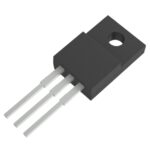 RB088T100HZC9
The activity of extra discounts on wholesale prices is in full swing…
Please fill in your contact information and we will send you the latest wholesale price list.





