 ChipApex | Global Electronic Components Supplier
SEARCH
Search Product
Search Post
— IC芯片 | 连接器 | 传感器 | 被动器件 —
Search productSearch post
— IC芯片 | 连接器 | 传感器 | 被动器件 —
Consult the customer manager about the wholesale price.
consultation hotline:86-132-6715-2157
email:[email protected]
Contact the product manager for consultation. One-stop consultation is available.
Do you want a lower wholesale price? Please send us your inquiry and we will reply immediately.
The RB095BGE-40TL is a silicon Schottky barrier diode manufactured by ROHM Semiconductor, housed in a TO-252-3 surface-mount package. It features a dual anode common cathode configuration with a maximum repetitive reverse voltage of 45 V and a continuous forward current rating of 6 A. The device exhibits a typical forward voltage of 550 mV at 3 A and a maximum reverse current of 100 uA. It supports a forward surge current of 50 A and operates at junction temperatures up to +150 C.
Verify the specific suffix TL indicates tape and reel packaging when ordering. Confirm RoHS compliance status through official datasheets as regulatory requirements may vary by region. Ensure the procurement channel provides authentic ROHM Semiconductor products to avoid counterfeit components. Check for any specific handling instructions related to the surface mount package type during assembly.
Select this component for applications requiring a compact surface-mount Schottky diode with moderate voltage ratings. The dual anode common cathode setup allows for flexible circuit topologies. Consider the 6 A current rating and 45 V blocking capability against your system's peak operating conditions. Evaluate thermal management needs given the TO-252-3 package size and maximum junction temperature specifications.
This part belongs to the RB095BGE series of Schottky barrier diodes from ROHM Semiconductor. The series offers various voltage ratings including 40 V, 60 V, and 90 V variants. These devices are designed for general rectification purposes with a focus on low forward voltage drop and high reliability. The TO-252-3 package provides a balance between current handling capability and board space efficiency.
Direct substitutes include RB095BGE-60TL and RB095BGE-90TL from the same manufacturer family, offering higher voltage ratings. Cross-brand equivalents should match the TO-252-3 package, 6 A current rating, and dual anode common cathode configuration. Verify electrical parameters such as forward voltage and reverse leakage current before substitution.
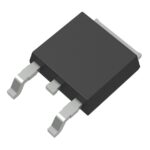 RB095BGE-40TL
The activity of extra discounts on wholesale prices is in full swing…
Please fill in your contact information and we will send you the latest wholesale price list.





