ChipApex | Global Electronic Components Supplier
SEARCH
Search Product
Search Post
— IC芯片 | 连接器 | 传感器 | 被动器件 —
Search productSearch post
— IC芯片 | 连接器 | 传感器 | 被动器件 —
Consult the customer manager about the wholesale price.
consultation hotline:86-132-6715-2157
email:[email protected]
Contact the product manager for consultation. One-stop consultation is available.
Do you want a lower wholesale price? Please send us your inquiry and we will reply immediately.
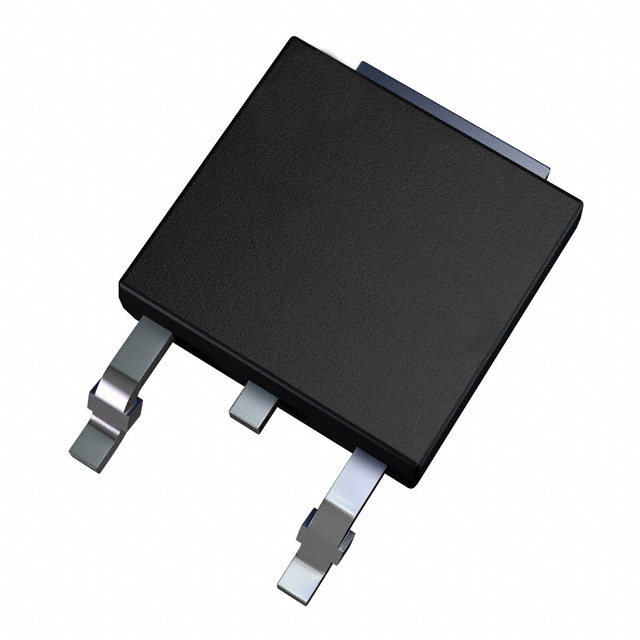
The RB238NS-30FHTL is a Schottky barrier diode manufactured by ROHM Semiconductor, designed for high-reliability applications including automotive electronics. It features a dual common cathode configuration in a TO-263S (D²PAK) surface-mount package. The device supports an average rectified forward current of 40 A per diode and withstands a maximum repetitive reverse voltage of 35 V. Key electrical parameters include a maximum forward voltage of 0.75 V at 20 A, a maximum reverse current of 12 mA at 30 V, and a peak forward surge current capability of 100 A. It operates with a junction temperature range up to +150°C and holds AEC-Q101 qualification.
Verify the specific suffix FHTL against the manufacturer's latest datasheet to confirm tape and reel packaging specifications. Ensure the ordering part number matches the required voltage and current ratings for the target application. Cross-reference the RoHS compliance status and AEC-Q101 certification documents directly from ROHM Semiconductor to guarantee authenticity and regulatory adherence before finalizing procurement.
Select this component when a dual common cathode Schottky diode is required for high-current automotive or industrial power conversion. The TO-263S package provides robust thermal dissipation for surface-mount designs. Consider the 35 V reverse voltage rating and 40 A continuous current capacity to ensure adequate headroom for the circuit's operational peaks and steady-state loads.
This component belongs to the RB238NS series of Schottky barrier diodes from ROHM Semiconductor. The series is engineered for high-efficiency rectification in power electronics. The RB238NS-30FHTL specifically denotes the 30V/35V variant within this lineup, offering a balance of low forward voltage drop and high current handling in a compact D²PAK form factor suitable for modern PCB layouts.
Check for direct substitutes such as the RB238NS-60FHTL or RB238NS-100FHTL if higher voltage ratings are acceptable. Verify pinout compatibility and thermal resistance values when considering alternatives from other manufacturers to ensure seamless integration without redesigning the heat sink or PCB footprint.
 RB238NS-30FHTL
The activity of extra discounts on wholesale prices is in full swing…
Please fill in your contact information and we will send you the latest wholesale price list.