ChipApex | Global Electronic Components Supplier
SEARCH
Search Product
Search Post
— IC芯片 | 连接器 | 传感器 | 被动器件 —
Search productSearch post
— IC芯片 | 连接器 | 传感器 | 被动器件 —
Consult the customer manager about the wholesale price.
consultation hotline:86-132-6715-2157
email:[email protected]
Contact the product manager for consultation. One-stop consultation is available.
Do you want a lower wholesale price? Please send us your inquiry and we will reply immediately.
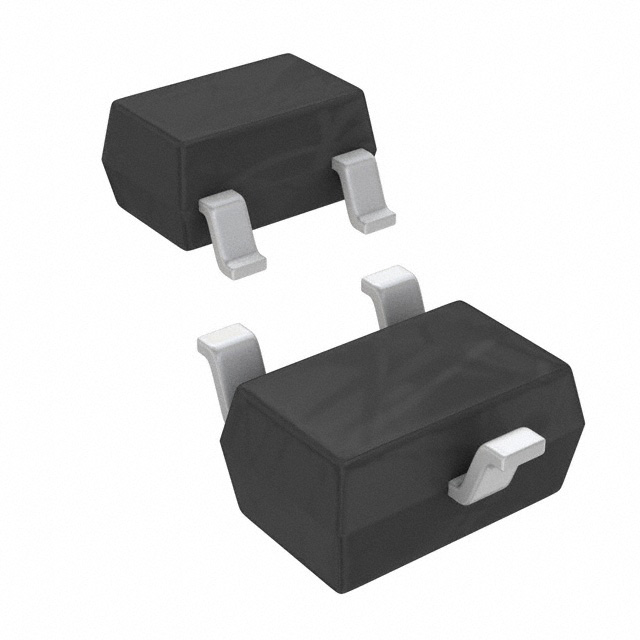
The RB715FM-40T106 is a Schottky barrier diode manufactured by ROHM Semiconductor, housed in an SOT-323 (UMD3) surface-mount package. It features a dual anode common cathode configuration with silicon technology. Key electrical parameters include a maximum repetitive reverse voltage of 40 V and an average rectified forward current of 30 mA per diode. The device exhibits a low forward voltage of 370 mV at 1 mA and a maximum reverse current of 1 µA at 10 V. It supports a peak forward surge current of 200 mA and operates within a junction temperature range up to +150°C.
Verify the specific suffix T106 against official ROHM documentation to confirm reel packaging specifications and tape-and-reel dimensions. Ensure the procurement channel provides genuine components with traceable manufacturing lot codes. Cross-reference the RoHS compliance status with the latest environmental declarations. Confirm that the supplier adheres to anti-counterfeiting protocols for semiconductor devices.
Select this component when a small form factor is required alongside low forward voltage drop for efficiency. The dual anode common cathode layout simplifies circuit design for applications needing two independent rectification paths from a single package. Consider the 40 V reverse voltage rating to ensure adequate margin over operating voltages. Evaluate the thermal performance based on the 150°C junction temperature limit for high-temperature environments.
This part belongs to the RB715 series of Schottky barrier diodes from ROHM Semiconductor. The series is characterized by ultra-low forward voltage and high reliability. The RB715FM variant specifically denotes the SOT-323 package version. This series is designed for general-purpose rectification and switching applications where size and efficiency are critical constraints.
The RB715ZMT2L is documented as a recommended replacement with the same pinout and package. Verify compatibility with the RB715F-TP from Micro Commercial Components, noting potential differences in manufacturer-specific tolerances or packaging formats.
 RB715FM-40T106
The activity of extra discounts on wholesale prices is in full swing…
Please fill in your contact information and we will send you the latest wholesale price list.