 ChipApex | Global Electronic Components Supplier
SEARCH
Search Product
Search Post
— IC芯片 | 连接器 | 传感器 | 被动器件 —
Search productSearch post
— IC芯片 | 连接器 | 传感器 | 被动器件 —
Consult the customer manager about the wholesale price.
consultation hotline:86-132-6715-2157
email:[email protected]
Contact the product manager for consultation. One-stop consultation is available.
Do you want a lower wholesale price? Please send us your inquiry and we will reply immediately.
The RBQ10BM45AFHTL is a silicon Schottky barrier diode manufactured by ROHM Semiconductor, designed for high-reliability applications. It features a dual anode common cathode configuration housed in a TO-252-3 (DPAK) surface-mount package. The device supports a maximum repetitive reverse voltage of 45 V and an average rectified forward current of 10 A. Key electrical parameters include a maximum forward voltage of 650 mV at 5 A, a peak forward surge current of 50 A, and a maximum reverse current of 150 uA at 45 V. It operates within a junction temperature range up to +150 °C and holds AEC-Q101 qualification.
Verify the complete part number including the suffix to ensure correct packaging and tape-and-reel specifications. Confirm AEC-Q101 compliance requirements match the target application standards. Check for any specific handling instructions related to the surface-mount package during soldering processes. Ensure compatibility with existing PCB footprint dimensions for the TO-252-3 housing.
Select this component when a low-voltage, high-current Schottky diode is required for automotive or industrial environments. The dual anode common cathode setup is suitable for full-wave rectification without requiring multiple discrete components. Consider the 45 V rating relative to system voltage peaks and the 10 A current capacity against thermal dissipation constraints in the chosen enclosure.
This part belongs to ROHM's RBQ series of automotive-grade Schottky barrier diodes. The series is characterized by high reliability and low forward voltage, specifically engineered for demanding electronic systems. The RBQ10BM45AFHTL variant utilizes the BM package code for the DPAK form factor, distinguishing it from other series members with different current ratings or voltage thresholds.
The RBR10BM45AFHTL is listed as a similar level replacement with the same pinout and package. Verify that the reverse recovery characteristics and specific forward voltage tolerances of the substitute meet the original circuit design requirements before implementation.
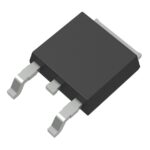 RBQ10BM45AFHTL
The activity of extra discounts on wholesale prices is in full swing…
Please fill in your contact information and we will send you the latest wholesale price list.





