ChipApex | Global Electronic Components Supplier
SEARCH
Search Product
Search Post
— IC芯片 | 连接器 | 传感器 | 被动器件 —
Search productSearch post
— IC芯片 | 连接器 | 传感器 | 被动器件 —
Consult the customer manager about the wholesale price.
consultation hotline:86-132-6715-2157
email:[email protected]
Contact the product manager for consultation. One-stop consultation is available.
Do you want a lower wholesale price? Please send us your inquiry and we will reply immediately.
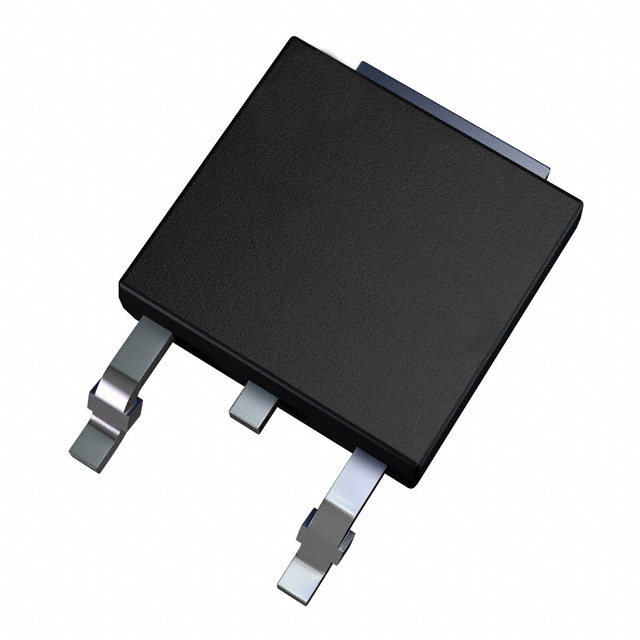
The RBQ20NS45AFHTL is a Schottky barrier diode manufactured by ROHM Semiconductor, designed for high-efficiency rectification in automotive and industrial applications. It features a dual anode common cathode configuration housed in a TO-263S (D2PAK) surface-mount package. The device supports a repetitive reverse voltage of 45 V and an average forward current of 20 A. Key electrical parameters include a maximum forward voltage of 540 mV at 10 A, a peak forward surge current capability of 100 A, and a low reverse leakage current of 30 uA. It operates at junction temperatures up to +150°C and complies with the AEC-Q101 automotive qualification standard.
Verify the complete part number including the suffix HTL to confirm reel packaging specifications. Ensure compatibility with the TO-263S footprint during PCB layout. Confirm that the design accounts for the 150°C maximum junction temperature rating. Validate that the 45V reverse voltage rating exceeds the circuit's peak inverse voltage requirements. Check for any specific handling instructions related to surface-mount assembly processes.
Select this component when a dual-diode solution is required in a D2PAK form factor. The 45V rating suits low-voltage automotive systems. Compare forward voltage characteristics against alternatives to optimize thermal management. Consider the 20A current capacity relative to the expected load profile. Verify that the AEC-Q101 certification meets specific OEM quality requirements.
This device belongs to ROHM's RBQ series of automotive Schottky barrier diodes. The series emphasizes high reliability and low forward voltage for power conversion applications. The TO-263S package provides enhanced thermal dissipation compared to smaller surface-mount options. The dual anode configuration offers design flexibility for various rectifier circuits.
The alias RBQ20NS45AFH represents the same functional device without the specific tape-and-reel suffix. Verify pinout compatibility before substitution. Ensure the replacement maintains the AEC-Q101 qualification if automotive use is required. Confirm that the thermal resistance characteristics match the existing heatsink design.
 RBQ20NS45AFHTL
The activity of extra discounts on wholesale prices is in full swing…
Please fill in your contact information and we will send you the latest wholesale price list.