 ChipApex | Global Electronic Components Supplier
SEARCH
Search Product
Search Post
— IC芯片 | 连接器 | 传感器 | 被动器件 —
Search productSearch post
— IC芯片 | 连接器 | 传感器 | 被动器件 —
Consult the customer manager about the wholesale price.
consultation hotline:86-132-6715-2157
email:[email protected]
Contact the product manager for consultation. One-stop consultation is available.
Do you want a lower wholesale price? Please send us your inquiry and we will reply immediately.
The REF3020AIDBZR is a precision voltage reference from Texas Instruments featuring an initial accuracy of ±0.2% and a low temperature coefficient of 15 ppm/°C. It operates within a supply voltage range of 2.7 V to 6 V, delivering a fixed output of 2.048 V with a maximum load current of 10 mA. The device exhibits low noise characteristics, specified at 12 µVpp for the 0.1 Hz to 10 Hz band, ensuring signal integrity in sensitive analog circuits. Packaged in a compact SOT-23-5 format, it supports both shunt and series configurations.
Verify the specific suffix 'DBZR' corresponds to the SOT-23-5 package and tape-and-reel quantity as defined in the official datasheet. Confirm that the 'A' grade designation matches the required ±0.2% initial accuracy specification for your design. Ensure compatibility with operating temperature ranges specified for industrial or commercial grades. Cross-reference the manufacturer's latest documentation to confirm pinout and electrical parameters remain unchanged.
Select this component when a fixed 2.048 V output is required with tight tolerance constraints. Consider the low noise profile if the application involves high-resolution analog-to-digital conversion. Evaluate the power budget against the quiescent current specifications to ensure efficiency in battery-operated devices. Verify that the SOT-23-5 package fits the available PCB real estate compared to larger packages offering higher current capabilities.
This part belongs to the REF30xx family of micropower voltage references designed for space-constrained applications. It complements other variants offering different output voltages such as 2.5 V or 5.0 V while maintaining similar performance metrics. The family is engineered to replace older discrete reference solutions, offering improved stability and reduced board footprint for modern electronic designs.
Direct substitutes include other REF30xx series parts like the REF3025 or REF3030 for different voltage needs. Check for equivalent packages from competitors such as Analog Devices' ADR series, ensuring matching pinouts and thermal characteristics. Verify that any alternative meets the same noise and accuracy specifications to maintain system performance without redesign.
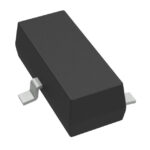 REF3020AIDBZR
The activity of extra discounts on wholesale prices is in full swing…
Please fill in your contact information and we will send you the latest wholesale price list.





