ChipApex | Global Electronic Components Supplier
SEARCH
Search Product
Search Post
— IC芯片 | 连接器 | 传感器 | 被动器件 —
Search productSearch post
— IC芯片 | 连接器 | 传感器 | 被动器件 —
Consult the customer manager about the wholesale price.
consultation hotline:86-132-6715-2157
email:[email protected]
Contact the product manager for consultation. One-stop consultation is available.
Do you want a lower wholesale price? Please send us your inquiry and we will reply immediately.
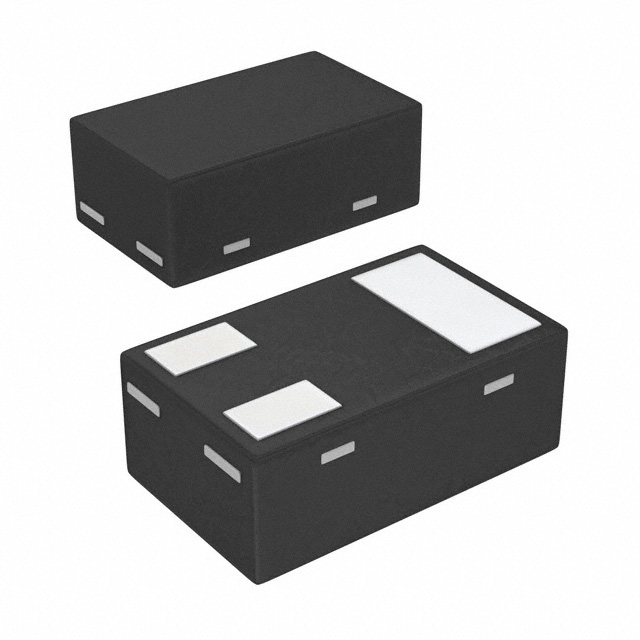
The RN1108ACT(TPL3) is a Bias Resistor Built-in Transistor (BRT) manufactured by Toshiba Semiconductor and Storage. It integrates an NPN bipolar junction transistor with a single base resistor (R1) in a compact surface-mount package. The device features a collector-emitter breakdown voltage of 50V, a continuous collector current rating of 100mA, and a maximum power dissipation of 100mW. The integrated base resistor has a typical value of 10kΩ. Designed for low-power switching applications, it operates within a temperature range of -40°C to +125°C and utilizes the SSM-6SC package.
Verify the specific suffix TPL3 against official Toshiba documentation to confirm tape-and-reel packaging specifications. Ensure compatibility with RoHS directives if required by the target application. Cross-reference the full part number with authorized distributors to confirm current availability status and lead times, as supply chain conditions may vary.
Select this component when a compact solution for NPN switching with integrated biasing is required. The 10kΩ base resistor suits standard logic levels. Verify that the 100mA collector current and 50V breakdown voltage meet the load requirements. Consider the SSM-6SC package dimensions for PCB layout constraints compared to alternative BRT packages.
The RN1108 series belongs to Toshiba's family of Bias Resistor Built-in Transistors designed to replace discrete transistor-resistor combinations. These devices are engineered to minimize board space and assembly costs while maintaining reliable performance in digital switching environments. The ACT variant typically denotes specific electrical tolerances or packaging configurations within the broader RN110x product line.
Potential substitutes include other NPN BRTs with similar 50V/100mA ratings and ~10kΩ base resistance, such as those from onsemi or Rohm. Verify pinout compatibility and thermal characteristics before substitution. Check datasheets for matching transition frequencies and saturation voltages to ensure functional equivalence in the specific circuit topology.
 RN1108ACT(TPL3)
The activity of extra discounts on wholesale prices is in full swing…
Please fill in your contact information and we will send you the latest wholesale price list.