 ChipApex | Global Electronic Components Supplier
SEARCH
Search Product
Search Post
— IC芯片 | 连接器 | 传感器 | 被动器件 —
Search productSearch post
— IC芯片 | 连接器 | 传感器 | 被动器件 —
Consult the customer manager about the wholesale price.
consultation hotline:86-132-6715-2157
email:[email protected]
Contact the product manager for consultation. One-stop consultation is available.
Do you want a lower wholesale price? Please send us your inquiry and we will reply immediately.
The RN1115MFV,L3F is a single NPN bias resistor built-in transistor (BRT) manufactured by Toshiba Semiconductor and Storage. It integrates two internal resistors, R1 and R2, into a compact SOT-723 surface-mount package designated as VESM. The device supports a maximum collector-emitter voltage of 50 V and a continuous collector current of 100 mA. Key electrical specifications include a DC current gain (hFE) of at least 50 at 10 mA and 5 V, with a saturation voltage of 300 mV maximum at 250 µA base current and 5 mA collector current. The unit features a transition frequency of 250 MHz and a maximum power dissipation of 150 mW. Internal resistance values are fixed at 2.2 kOhms for the base resistor and 10 kOhms for the emitter resistor.
Verify the specific ordering suffix L3F to confirm tape-and-reel packaging quantities and lead times directly with authorized distributors. Confirm RoHS compliance status and check for obsolescence notices, as the part status may be listed as not recommended for new designs in some catalogs. Ensure sourcing from authorized channels to guarantee authenticity and traceability for automotive or industrial deployments.
Select this component when a single NPN BJT with integrated biasing is required for space-constrained designs. Compare against complementary PNP models like the RN2115MFV if symmetrical push-pull configurations are needed. Verify that the 2.2 kOhm base resistance aligns with the driving source impedance and desired switching speed requirements before finalizing the schematic.
This component belongs to the RN1115 series of bias resistor built-in transistors. It shares the same SOT-723 (VESM) footprint and general electrical characteristics with other variants in the family, differing primarily in internal resistor ratios. It serves as a direct replacement for discrete resistor-transistor networks in standard logic interface applications.
Publicly confirmed complementary substitutes include the RN2115MFV,L3F for PNP polarity requirements. Designers should verify pinout compatibility and thermal performance when substituting with generic BRT parts from other manufacturers.
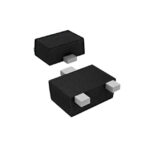 RN1115MFV,L3F
The activity of extra discounts on wholesale prices is in full swing…
Please fill in your contact information and we will send you the latest wholesale price list.




