ChipApex | Global Electronic Components Supplier
SEARCH
Search Product
Search Post
— IC芯片 | 连接器 | 传感器 | 被动器件 —
Search productSearch post
— IC芯片 | 连接器 | 传感器 | 被动器件 —
Consult the customer manager about the wholesale price.
consultation hotline:86-132-6715-2157
email:[email protected]
Contact the product manager for consultation. One-stop consultation is available.
Do you want a lower wholesale price? Please send us your inquiry and we will reply immediately.
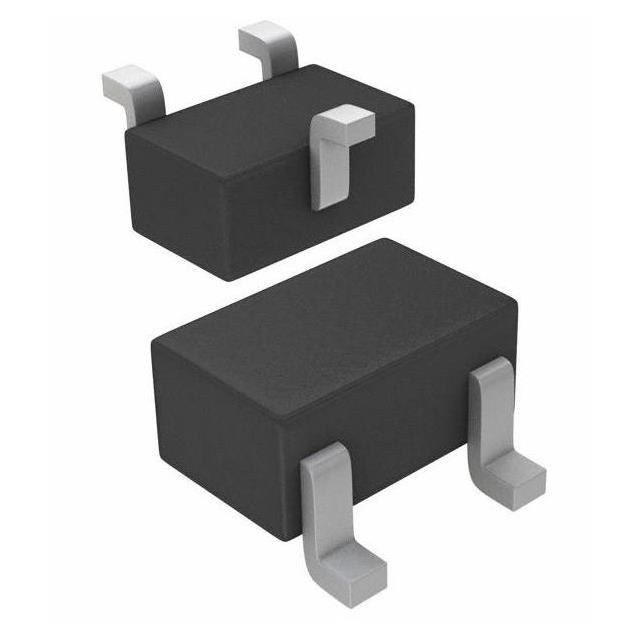
The RN2309,LF is a PNP digital transistor featuring built-in bias resistors, manufactured by Toshiba Semiconductor and Storage. It operates with a maximum collector-emitter voltage of -50V and a continuous collector current of -100mA. The device incorporates a typical base resistor (R1) of 47 kOhms and an emitter resistor (R2) of 22 kOhms, resulting in a resistance ratio of approximately 2.14. It is housed in a compact SC-70 (SOT-323) surface-mount package. The component supports a transition frequency up to 250 MHz and maintains a minimum DC current gain (hFE) of 70. Designed for automotive applications, it complies with AEC-Q101 standards and functions within an operating temperature range of -40°C to +125°C.
Verify the specific suffix designation against official Toshiba documentation to confirm exact electrical tolerances and automotive qualification status. Ensure the ordered variant matches the required resistance values and package type. Confirm RoHS compliance and lead times directly with authorized distributors. Validate that the component meets all relevant industry standards for the intended application environment before finalizing procurement decisions.
Select this component when a PNP switching solution with integrated biasing is required to reduce external component count. The fixed resistor ratio simplifies base drive calculations compared to discrete transistors. Consider the SC-70 package size for tight spatial constraints. Evaluate the -50V rating against peak transient voltages in the target circuit to ensure adequate safety margins during operation.
This part belongs to Toshiba's RN series of pre-biased transistors, which combine bipolar junction transistors with internal resistors to replace multiple discrete components. The RN2309 specifically targets PNP applications in automotive and industrial sectors. It serves as a compact alternative to separate transistor-resistor networks, improving reliability and reducing assembly complexity in modern electronic designs.
Consult official Toshiba substitution guides for verified equivalents. Cross-reference pinouts and electrical characteristics carefully when considering alternatives from other manufacturers to ensure functional compatibility.
 RN2309,LF
The activity of extra discounts on wholesale prices is in full swing…
Please fill in your contact information and we will send you the latest wholesale price list.