 ChipApex | Global Electronic Components Supplier
SEARCH
Search Product
Search Post
— IC芯片 | 连接器 | 传感器 | 被动器件 —
Search productSearch post
— IC芯片 | 连接器 | 传感器 | 被动器件 —
Consult the customer manager about the wholesale price.
consultation hotline:86-132-6715-2157
email:[email protected]
Contact the product manager for consultation. One-stop consultation is available.
Do you want a lower wholesale price? Please send us your inquiry and we will reply immediately.
The RS6334XP is a CMOS quad operational amplifier manufactured by Runic Technology, housed in a 14-SOIC surface-mount package. It features four independent circuits with rail-to-rail output capability. Key electrical specifications include a supply voltage range of 2.5 V to 5.5 V, a total supply current of 58 µA for all four channels, and an output current per channel of 55 mA. The device exhibits a gain-bandwidth product of 1.1 MHz, a slew rate of 0.5 V/µs, an input bias current of 1 pA, and an input offset voltage of 600 µV. It operates within a temperature range of -40°C to 125°C.
Verify the specific ordering suffix to ensure correct packaging configuration, such as tape and reel or cut tape options. Confirm RoHS compliance status and moisture sensitivity level requirements prior to integration into manufacturing processes. Cross-reference the manufacturer part number with distributor databases to validate current availability and lead times for production planning purposes.
Select this component when a quad amplifier configuration is required with low power constraints and rail-to-rail output performance. The 14-SOIC package offers a compact footprint suitable for space-constrained designs. Ensure the application voltage remains within the 2.5 V to 5.5 V range to maintain specified electrical parameters and reliability standards over the industrial temperature range.
This component belongs to the RS633x series of CMOS operational amplifiers from Runic Technology. The series includes variants with different pin counts and circuit configurations, such as dual and single channel options. The RS6334XP specifically provides four independent amplifiers in a single package, offering a cost-effective solution for multi-channel signal processing applications compared to using discrete single-op-amp solutions.
Direct replacements should be sought among other quad CMOS op-amps with similar supply voltage ranges and rail-to-rail outputs. Verify pin compatibility with the 14-SOIC package before substitution. Consider alternatives with comparable gain-bandwidth products and supply currents if power efficiency is critical.
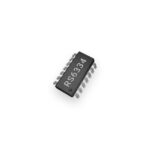 RS6334XP
The activity of extra discounts on wholesale prices is in full swing…
Please fill in your contact information and we will send you the latest wholesale price list.






