 ChipApex | Global Electronic Components Supplier
SEARCH
Search Product
Search Post
— IC芯片 | 连接器 | 传感器 | 被动器件 —
Search productSearch post
— IC芯片 | 连接器 | 传感器 | 被动器件 —
Consult the customer manager about the wholesale price.
consultation hotline:86-132-6715-2157
email:[email protected]
Contact the product manager for consultation. One-stop consultation is available.
Do you want a lower wholesale price? Please send us your inquiry and we will reply immediately.
The S3D20065C is a silicon carbide (SiC) Schottky rectifier diode array manufactured by SMC Diode Solutions. It features a dual common cathode configuration housed in a TO-220-3 through-hole package. The device is rated for a maximum repetitive peak reverse voltage of 650 V and an average forward rectified current of 10 A per leg. Key electrical parameters include a maximum DC forward voltage of 1.75 V at 10 A and a maximum non-repetitive surge forward current of 180 A. The component operates within a junction temperature range of -55°C to +175°C, ensuring robust performance under high-temperature conditions.
Verify the specific suffix codes on the datasheet to confirm pinout orientation and packaging variations, as these may affect mechanical integration. Ensure that the procurement documentation explicitly states compliance with RoHS and REACH regulations to meet environmental standards. Confirm that the supplier provides valid traceability records for the silicon carbide material batch to guarantee consistent electrical performance across production runs.
Select this component when designing circuits that demand high efficiency at elevated frequencies where silicon diode reverse recovery losses are prohibitive. The TO-220-3 package facilitates direct mounting onto heatsinks for effective thermal management in high-power density designs. Consider the 650 V rating to ensure adequate voltage headroom against transient spikes common in inductive load switching environments.
This part belongs to the S3D series of silicon carbide Schottky rectifiers from SMC Diode Solutions. The series is engineered for high-performance power electronics, offering a distinct advantage over standard silicon rectifiers in terms of switching speed and thermal resilience. The dual common cathode arrangement allows for efficient implementation in bridge or half-bridge topologies without requiring discrete external connections.
Direct replacements must match the 650 V / 10 A rating and TO-220-3 package. Verify that substitute parts also utilize SiC technology to maintain zero reverse recovery characteristics. Generic silicon alternatives will introduce significant switching losses and require derating, potentially compromising system efficiency and thermal performance.
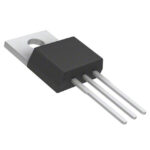 S3D20065C
The activity of extra discounts on wholesale prices is in full swing…
Please fill in your contact information and we will send you the latest wholesale price list.





