 ChipApex | Global Electronic Components Supplier
SEARCH
Search Product
Search Post
— IC芯片 | 连接器 | 传感器 | 被动器件 —
Search productSearch post
— IC芯片 | 连接器 | 传感器 | 被动器件 —
Consult the customer manager about the wholesale price.
consultation hotline:86-132-6715-2157
email:[email protected]
Contact the product manager for consultation. One-stop consultation is available.
Do you want a lower wholesale price? Please send us your inquiry and we will reply immediately.
The SA614AD,118 is a monolithic low-power FM IF system by NXP USA Inc., housed in a 16-SOIC package. It operates at a frequency of 25MHz and supports RF types including cellular, ASK, and FSK applications. The device integrates two limiting intermediate frequency amplifiers, a quadrature detector, and muting functionality. It features RSSI capability and is designed for surface mount installation with a height of 1.35mm. The component is RoHS compliant and classified as obsolete.
Verify component status carefully as the SA614AD,118 is officially listed as obsolete by the manufacturer. Confirm availability through authorized distributors or secondary markets if sourcing is required. Ensure that the 16-SOIC package dimensions and pinout match the design specifications. Check for RoHS compliance documentation to meet environmental regulations. Validate that the 25MHz operating frequency aligns with the target application requirements before procurement.
Select this component for designs requiring a complete FM IF solution in a compact surface-mount form factor. The integrated quadrature detector and limiting amplifiers reduce external component count. Consider the 25MHz frequency limit when designing for higher bandwidth applications. The RSSI feature allows for signal strength monitoring without additional circuitry. Verify compatibility with ASK and FSK protocols if used in digital transmission contexts.
The SA614A series represents an improved monolithic low-power FM IF system. The SA614AD,118 variant specifically denotes the tape and reel packaging format within the 16-SOIC family. This series is designed to simplify receiver architecture by combining critical analog stages into a single chip. It serves as a legacy solution for specific RF front-end applications requiring integrated demodulation capabilities.
Public confirmed substitute part numbers are not available in the provided documentation. As the product status is obsolete, alternative components must be sourced based on functional equivalence rather than direct cross-reference lists.
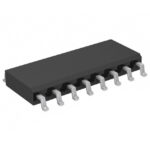 SA614AD,118
The activity of extra discounts on wholesale prices is in full swing…
Please fill in your contact information and we will send you the latest wholesale price list.





