ChipApex | Global Electronic Components Supplier
SEARCH
Search Product
Search Post
— IC芯片 | 连接器 | 传感器 | 被动器件 —
Search productSearch post
— IC芯片 | 连接器 | 传感器 | 被动器件 —
Consult the customer manager about the wholesale price.
consultation hotline:86-132-6715-2157
email:[email protected]
Contact the product manager for consultation. One-stop consultation is available.
Do you want a lower wholesale price? Please send us your inquiry and we will reply immediately.
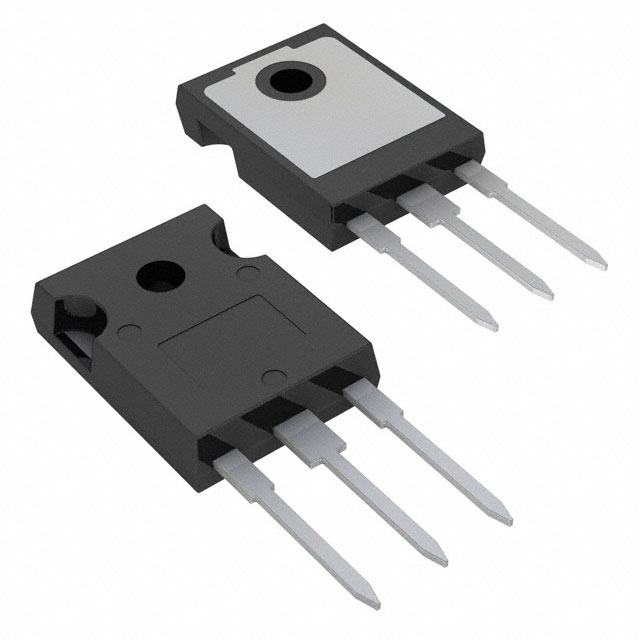
The SB4030PT_T0_00001 is a Schottky barrier rectifier from the SB4020PT series manufactured by Panjit International Inc. It features a maximum average forward current of 40 Amperes at a case temperature of 90°C and a maximum repetitive peak reverse voltage of 30 Volts. The device exhibits a maximum forward voltage of 0.70 Volts at 20 Amperes per leg and supports a peak forward surge current of 350 Amperes for an 8.3ms half-sine wave. It utilizes a TO-247AD/TO-3P molded plastic package with solder-plated terminals, operates within a junction temperature range of -55 to +150°C, and has a typical thermal resistance of 1.5°C/W.
Verify the specific part number suffix against official documentation to confirm packaging type and compliance status. The provided datasheet indicates that ordering suffixes define packing codes such as Tape and Reel or Tube, and version codes indicating RoHS compliance. Ensure the component matches the required mechanical data and terminal specifications for your assembly process.
Select this component when designing circuits requiring a 30-volt blocking voltage and 40-ampere continuous current handling in a TO-247AD package. Consider the 0.70-volt forward voltage drop at 20 amperes for thermal management calculations. Verify derating requirements for capacitive loads, which mandate a 20% current reduction, and ensure the operating environment stays within the specified junction temperature limits.
This component belongs to the SB4020PT series of Schottky Barrier Rectifiers produced by Panjit International Inc. The series covers voltage ratings from 20 to 60 volts while maintaining a consistent 40-ampere current rating across variants. The SB4030PT specifically addresses applications needing a 30-volt reverse voltage threshold within this standardized product family.
Publicly confirmed substitute part numbers are not available in the verified source material.
The maximum DC blocking voltage for the SB4030PT is 30 Volts.
For capacitive loads, the current must be derated by 20 percent from the rated load.
The typical thermal resistance (RθJC) is 1.5°C/W.
 SB4030PT_T0_00001
The activity of extra discounts on wholesale prices is in full swing…
Please fill in your contact information and we will send you the latest wholesale price list.