 ChipApex | Global Electronic Components Supplier
SEARCH
Search Product
Search Post
— IC芯片 | 连接器 | 传感器 | 被动器件 —
Search productSearch post
— IC芯片 | 连接器 | 传感器 | 被动器件 —
Consult the customer manager about the wholesale price.
consultation hotline:86-132-6715-2157
email:[email protected]
Contact the product manager for consultation. One-stop consultation is available.
Do you want a lower wholesale price? Please send us your inquiry and we will reply immediately.
The SFH601-3SM is a single-channel optocoupler manufactured by Isocom Components, featuring an NPN phototransistor output. It utilizes surface-mount technology within a compact DIP-style package. The device provides high isolation voltage and operates across a wide temperature range. Key electrical parameters include a maximum collector-emitter breakdown voltage of 70 V, a typical current transfer ratio of 40%, and a maximum forward current of 60 mA. It supports DC input and offers standard rise and fall times suitable for general-purpose signal isolation applications.
Verify the specific suffix designation against official manufacturer documentation to confirm pinout compatibility and lead form variations. Ensure that the surface-mount variant matches the required footprint dimensions for your PCB layout. Cross-reference the component marking codes with approved datasheets to authenticate the source and prevent counterfeit components from entering the supply chain.
Select this component when a single-channel isolation solution with an NPN transistor output is required. Consider the current transfer ratio limits and switching speed characteristics relative to your application's timing requirements. Evaluate the thermal management needs based on the maximum forward current specifications and ambient operating conditions defined in the technical data sheets.
This component belongs to the SFH601 series of optocouplers, which are widely recognized for their reliability in digital signal transmission. The series includes various variants differentiated by output types and packaging styles. Isocom Components sources these devices to meet industry standards for optical isolation, providing alternatives for legacy designs requiring robust component substitution.
Direct replacements may include other single-channel NPN phototransistor optocouplers with compatible pinouts and isolation ratings. Verify that substitute parts match the current transfer ratio ranges and switching speeds to maintain circuit performance. Check for equivalent safety certifications such as UL or VDE approvals if regulatory compliance is mandatory for the end application.
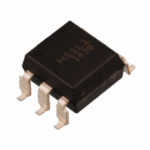 SFH601-3SM
The activity of extra discounts on wholesale prices is in full swing…
Please fill in your contact information and we will send you the latest wholesale price list.






