 ChipApex | Global Electronic Components Supplier
SEARCH
Search Product
Search Post
— IC芯片 | 连接器 | 传感器 | 被动器件 —
Search productSearch post
— IC芯片 | 连接器 | 传感器 | 被动器件 —
Consult the customer manager about the wholesale price.
consultation hotline:86-132-6715-2157
email:[email protected]
Contact the product manager for consultation. One-stop consultation is available.
Do you want a lower wholesale price? Please send us your inquiry and we will reply immediately.
The SFH601-3X006 is a single-channel transistor output optocoupler manufactured by Vishay Semiconductor Opto Division. It features an NPN phototransistor with a base connection for enhanced switching speed and noise immunity. The device provides high isolation voltage of 5000 Vrms (or 5300 Vrms per specific listings) between input and output circuits. Key electrical parameters include a forward current of 60 mA, forward voltage of 1.65 V, and a collector-emitter saturation voltage of 400 mV. The current transfer ratio ranges from 100% to 200%. It operates within a temperature range of -55°C to +100°C and is housed in a DIP-6 package.
Verify the exact isolation rating specification, as sources cite both 5000 Vrms and 5300 Vrms. Confirm component availability status, as some distributors list this part as obsolete while others indicate stock presence. Ensure the DIP-6 package dimensions match the required PCB layout constraints before finalizing procurement orders.
Select this component when base-controlled switching speed is critical for the application. The available base connection allows for external biasing or faster discharge of the phototransistor junction capacitance. Compare the CTR range against the driving circuit requirements to ensure reliable logic level translation across the specified temperature range.
This part belongs to the SFH601 series of transistor output optocouplers. It shares the same physical DIP-6 footprint and basic electrical characteristics with variants like SFH601-3 and SFH601-4, differing primarily in the guaranteed current transfer ratio bins. The X006 suffix typically denotes specific packaging or tape-and-reel configurations, though tube packaging is also documented.
Direct substitutes include SFH601-3 and SFH601-4, which share identical pinouts and mechanical dimensions. Verify that the replacement variant's current transfer ratio meets the minimum design threshold. Other generic NPN phototransistor optocouplers may require circuit redesign due to differences in isolation voltage or switching speed.
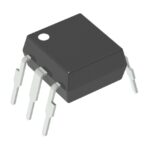 SFH601-3X006
The activity of extra discounts on wholesale prices is in full swing…
Please fill in your contact information and we will send you the latest wholesale price list.






