ChipApex | Global Electronic Components Supplier
SEARCH
Search Product
Search Post
— IC芯片 | 连接器 | 传感器 | 被动器件 —
Search productSearch post
— IC芯片 | 连接器 | 传感器 | 被动器件 —
Consult the customer manager about the wholesale price.
consultation hotline:86-132-6715-2157
email:[email protected]
Contact the product manager for consultation. One-stop consultation is available.
Do you want a lower wholesale price? Please send us your inquiry and we will reply immediately.
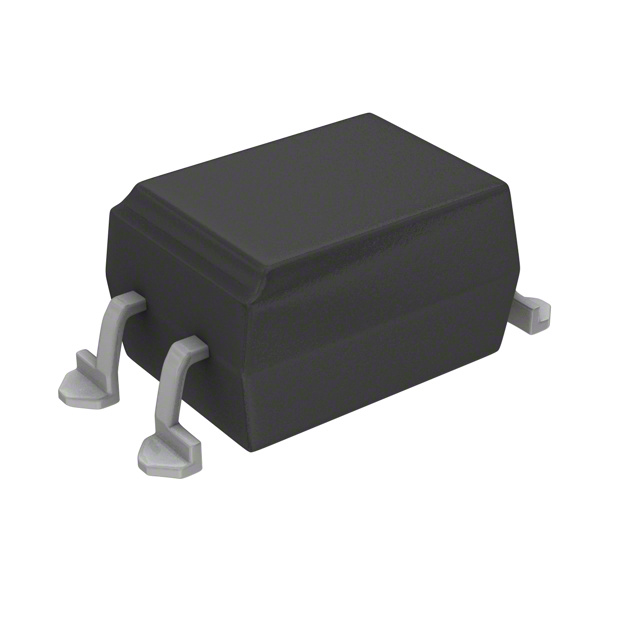
The SFH6156-4X001T is a single-channel transistor output optocoupler manufactured by Vishay Semiconductor Opto Division. It features an NPN phototransistor output and utilizes a surface-mount SMD-4 package. The device provides high isolation with a rated insulation voltage of 5300 Vrms. Key electrical parameters include a minimum collector-emitter breakdown voltage of 70 V, a maximum forward current of 60 mA, and a typical forward voltage of 1.65 V. The current transfer ratio ranges from 160% to 320%. Switching characteristics specify a rise time of 4 µs and a fall time of 15 µs. Power dissipation is limited to 150 mW, and the unit operates within a temperature range of -55°C to +100°C.
Verify that the specific suffix X001T corresponds to the required tape-and-reel packaging configuration for your manufacturing line. Confirm that the 5300 Vrms isolation rating meets the safety standards applicable to your target market. Ensure that the SMD-4 package dimensions align with your PCB footprint design rules. Check for any recent product change notifications regarding lead frame or material composition updates.
Select this component when high current transfer ratio is critical for driving subsequent stages without additional amplification. The NPN phototransistor output is suitable for standard logic interfacing. Consider the 4 µs rise time for medium-speed digital applications. The wide operating temperature range supports deployment in harsh industrial environments where thermal stability is required.
This part belongs to the SFH6156 series of transistor output optocouplers. The series offers various packaging options including tube and reel configurations. The SFH6156-4 variant specifically denotes the single-channel configuration with the associated pinout. The X001T suffix typically indicates specific reel packaging requirements distinct from the standard tube-packed SFH6156-4.
The VO615A-1X001 is listed as a recommended alternative in distributor catalogs. However, it differs significantly in isolation voltage (5000 Vrms vs 5300 Vrms) and current transfer ratio (40-80% vs 160-320%). Verify if these parameter differences are acceptable for your specific circuit design before substitution.
 SFH6156-4X001T
The activity of extra discounts on wholesale prices is in full swing…
Please fill in your contact information and we will send you the latest wholesale price list.