ChipApex | Global Electronic Components Supplier
SEARCH
Search Product
Search Post
— IC芯片 | 连接器 | 传感器 | 被动器件 —
Search productSearch post
— IC芯片 | 连接器 | 传感器 | 被动器件 —
Consult the customer manager about the wholesale price.
consultation hotline:86-132-6715-2157
email:[email protected]
Contact the product manager for consultation. One-stop consultation is available.
Do you want a lower wholesale price? Please send us your inquiry and we will reply immediately.
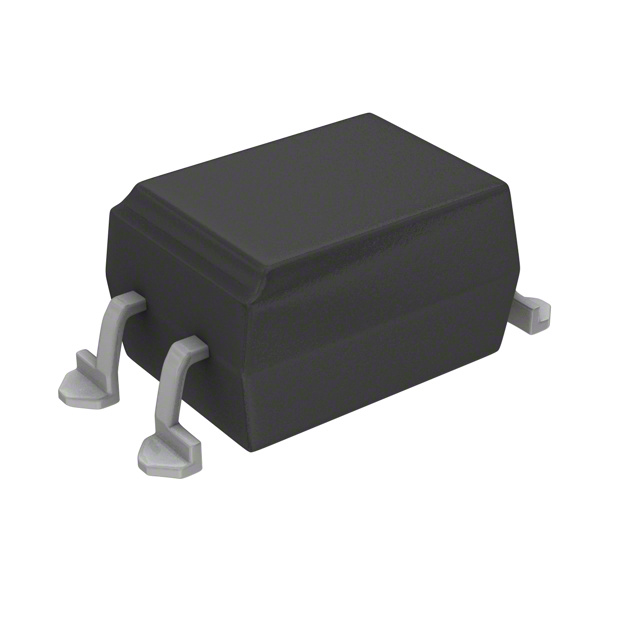
The SFH615A-2X009T is a single-channel transistor output optocoupler manufactured by Vishay Semiconductor Opto Division. It features an NPN phototransistor output with a current transfer ratio ranging from 63% to 125%. The device provides high isolation voltage of 5300 Vrms and operates within a temperature range of -55°C to +100°C. Key electrical parameters include a maximum collector-emitter voltage of 70 V, a maximum collector current of 50 mA, and a forward current of 60 mA. The component is housed in a compact 4-SMD surface-mount package.
Verify the specific suffix designation against official Vishay documentation to confirm the exact current transfer ratio binning and packaging type. Ensure that the procurement source provides valid traceability and authenticity certificates matching the manufacturer's specifications. Cross-reference the datasheet revision date to confirm compliance with current environmental regulations such as RoHS standards before finalizing orders.
Select this component when a single-channel isolation barrier with moderate speed requirements is needed. The 4-SMD package offers space efficiency compared to through-hole alternatives. Consider the specific CTR range required for the application to ensure proper drive conditions are met without exceeding maximum ratings. Evaluate thermal management needs based on the specified power dissipation limits in the operating environment.
This part belongs to the SFH615A series of high-reliability optocouplers designed for robust performance in demanding environments. The series utilizes advanced semiconductor technology to maintain consistent optical coupling characteristics over time. It serves as a critical interface component in systems requiring galvanic separation between low-voltage control logic and higher-voltage power stages.
Direct replacements must match the 4-SMD footprint, 5300 Vrms isolation rating, and NPN output type. Verify that alternative components offer comparable current transfer ratios and switching times to maintain circuit timing integrity. Check for pinout compatibility to avoid PCB redesign efforts during substitution.
 SFH615A-2X009T
The activity of extra discounts on wholesale prices is in full swing…
Please fill in your contact information and we will send you the latest wholesale price list.