 ChipApex | Global Electronic Components Supplier

SEARCH
Search Product
Search Post
— IC芯片 | 连接器 | 传感器 | 被动器件 —
Search productSearch post
— IC芯片 | 连接器 | 传感器 | 被动器件 —
Consult the customer manager about the wholesale price.
consultation hotline:86-132-6715-2157
email:[email protected]
Contact the product manager for consultation. One-stop consultation is available.
Do you want a lower wholesale price? Please send us your inquiry and we will reply immediately.
The SG-8506CA-PRLF is a programmable crystal oscillator (SPXO) manufactured by EPSON. It operates within a supply voltage range of 2.5V to 3.3V and supports frequencies up to 800MHz with a frequency stability of ±31.5ppm. The device features an LVPECL output mode and draws a typical operating current of 90mA. It utilizes an I2C interface for configuration and includes an internal PLL circuit. The component is housed in an 8-SMD, No Lead package with dimensions of 7x5mm and functions reliably across a temperature range of -40℃ to +85℃.
Verify the specific ordering suffix against official EPSON documentation to ensure compatibility with required frequency and tolerance specifications. Confirm that the I2C address and enable/disable pin configurations align with the target system design. Ensure the 8-SMD package footprint matches the PCB layout constraints. Cross-reference the operating temperature range with environmental requirements. Validate that the LVPECL output load conditions are met by the receiving circuitry.
Select this component when a programmable oscillator with LVPECL outputs is required for frequencies up to 800MHz. Consider the ±31.5ppm stability specification against system jitter budgets. Evaluate the 90mA current consumption against power management goals. Ensure the design supports I2C programming for frequency adjustments. Verify that the 2.5V to 3.3V supply range matches available power rails.
This part belongs to the SG-8506CA series of programmable oscillators from EPSON. The series is designed for applications needing flexible frequency synthesis without external components. The SG-8506CA variant specifically integrates an I2C interface for digital control. It serves as a drop-in replacement for fixed-frequency oscillators where tunability is beneficial. The family emphasizes compact packaging and low power consumption.
Public confirmed substitute part numbers are not available in the provided documentation. Direct replacements should be sourced from EPSON's official product portfolio or verified through manufacturer cross-reference tools. Ensure any alternative maintains LVPECL output and I2C programmability.
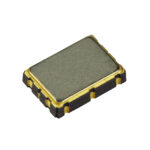 SG-8506CA-PRLF

The activity of extra discounts on wholesale prices is in full swing…
Please fill in your contact information and we will send you the latest wholesale price list.





