 ChipApex | Global Electronic Components Supplier

SEARCH
Search Product
Search Post
— IC芯片 | 连接器 | 传感器 | 被动器件 —
Search productSearch post
— IC芯片 | 连接器 | 传感器 | 被动器件 —
Consult the customer manager about the wholesale price.
consultation hotline:86-132-6715-2157
email:[email protected]
Contact the product manager for consultation. One-stop consultation is available.
Do you want a lower wholesale price? Please send us your inquiry and we will reply immediately.
The SG-9101CA-C02PGABB is a programmable spread spectrum crystal oscillator from the SG-9101 series, manufactured by EPSON. It features a CMOS output and operates within a supply voltage range of 1.62V to 3.63V. The device supports a frequency range of 670 kHz to 170 MHz and includes enable/disable functionality with center spread modulation. It is housed in a compact 4-SMD, no-lead package measuring 7.0mm x 5.0mm x 1.2mm. The unit is designed for surface mount installation and functions reliably across an operating temperature range of -40°C to +85°C.
This component is supplied as a blank oscillator that requires programming to the specific target frequency upon order placement. Buyers must explicitly specify the required frequency during the ordering process to ensure correct configuration. Verify that the selected package dimensions and electrical parameters align with the design requirements before finalizing procurement. Confirm compatibility with the intended supply voltage and logic levels.
Select this model when a compact, programmable solution with spread spectrum capabilities is required. Ensure the design accommodates the 1.62V to 3.63V supply range and utilizes CMOS-compatible inputs. Consider the thermal environment to guarantee operation within the specified -40°C to +85°C range. Verify that the 4-SMD footprint fits the available PCB space and that the enable pin can be properly controlled by the host system.
The SG-9101CA-C02PGABB belongs to the SG-9101 family of programmable crystal oscillators. This series is characterized by its ability to provide customized frequencies while maintaining high stability and low jitter. The CA suffix indicates a specific package variant within the lineup, offering a balance between size and performance for modern electronic applications requiring flexible clock sources.
Direct replacements within the same series include models such as SG-9101CG-C02PGABB or SG-9101CB-D05SGAAB, provided they match the required package size and electrical specifications. Verify that any substitute part supports the necessary frequency range and modulation type. Ensure the replacement maintains compatibility with the existing board layout and power supply constraints.
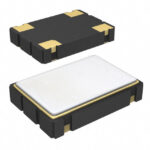 SG-9101CA-C02PGABB

The activity of extra discounts on wholesale prices is in full swing…
Please fill in your contact information and we will send you the latest wholesale price list.





