 ChipApex | Global Electronic Components Supplier

SEARCH
Search Product
Search Post
Search productSearch post
Consult the customer manager about the wholesale price.
consultation hotline:86-132-6715-2157
email:[email protected]
Contact the product manager for consultation. One-stop consultation is available.
Do you want a lower wholesale price? Please send us your inquiry and we will reply immediately.
SG-9101CA-D30PHCBA is listed in the Programmable Oscillators range at ChipApex. The manufacturer field lists EPSON. Its product description is XTAL OSC PROG XO CMOS DWN SPRD. Review the specifications below when checking this part for your BOM.
The SG-9101CA-D30PHCBA is a surface-mount crystal oscillator manufactured by Epson. It operates at a fundamental frequency of 30 MHz with a specified load capacitance of 18 pF. The device utilizes a 4-pin SMD package, specifically the 2520 (6.4 x 5.0 mm) footprint, designed for compact electronic assemblies. It features a parallel resonant mode operation and supports standard CMOS output levels. The component is rated for an operating temperature range from -40°C to +85°C, ensuring reliability in various environmental conditions. Frequency stability is maintained within tight tolerances across the specified temperature range.
Verify the exact ordering code against official Epson documentation to ensure correct frequency, tolerance, and package specifications. Confirm that the requested variant matches the required load capacitance and output type. Check for any specific handling or storage requirements mentioned in the datasheet. Ensure compatibility with the target circuit's input impedance and drive level constraints before finalizing procurement.
Select this component when a stable 30 MHz clock signal is required in a small form factor. Consider the 18 pF load capacitance requirement for accurate frequency tuning in the circuit design. Evaluate the -40°C to +85°C operating range against the application's environmental demands. Ensure the CMOS output level aligns with the receiving logic family voltage thresholds.
This part belongs to Epson's SG-9101 series of high-performance crystal oscillators. The series is known for providing reliable timing solutions for portable and industrial electronics. The CA suffix typically denotes specific packaging or tape-and-reel configuration details, while D30 indicates the 30 MHz frequency. PHCBA refers to the specific pinout and mechanical dimensions of the 2520 package.
Direct replacements must match the 30 MHz frequency, 18 pF load capacitance, and 2520 package dimensions. Verify equivalent electrical characteristics such as frequency stability and output waveform. Consult manufacturer cross-reference lists for approved alternatives. Ensure substitute components meet the same operating temperature range and quality standards.
Explore related parts through Crystals, Oscillators, Resonators, all product categories, ChipApex homepage.
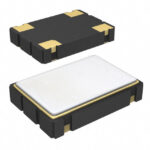 SG-9101CA-D30PHCBA

The activity of extra discounts on wholesale prices is in full swing…
Please fill in your contact information and we will send you the latest wholesale price list.





