 ChipApex | Global Electronic Components Supplier
SEARCH
Search Product
Search Post
— IC芯片 | 连接器 | 传感器 | 被动器件 —
Search productSearch post
— IC芯片 | 连接器 | 传感器 | 被动器件 —
Consult the customer manager about the wholesale price.
consultation hotline:86-132-6715-2157
email:[email protected]
Contact the product manager for consultation. One-stop consultation is available.
Do you want a lower wholesale price? Please send us your inquiry and we will reply immediately.
The SG-9101CG-D40PGABB is a programmable spread-spectrum oscillator from Epson, designed for surface-mount applications. It operates within a supply voltage range of 1.62V to 3.63V and supports frequencies up to 170MHz. The device utilizes CMOS output technology and features a compact 4-SMD, no-lead package with dimensions corresponding to the 2520-4P footprint. It functions across an extended temperature range of -40°C to +85°C. Maximum current consumption in disable mode is specified at 3.7 mA. This component integrates programmability for frequency adjustment and spread-spectrum capabilities.
Verify the specific part number against official Epson documentation to ensure compatibility with required frequency and voltage parameters. Confirm that the 4-SMD package type matches the target PCB layout. Check datasheet specifications for operating temperature ranges and electrical characteristics relevant to the application environment. Ensure sourcing channels provide genuine components with appropriate quality certifications.
Select this component when design requirements include programmable frequency control and spread-spectrum capabilities within a small form factor. Consider the 1.62V to 3.63V supply range for compatibility with system power rails. Evaluate the 170MHz maximum frequency against signal integrity needs. Assess the -40°C to +85°C temperature range for environmental suitability. Compare package dimensions against available board space constraints.
This model belongs to the SG-9101Cx series of programmable oscillators from Epson. The series offers flexible configuration options for various timing applications. The SG-9101CG-D40PGABB variant specifically addresses needs for compact, low-voltage, and EMI-sensitive designs. It complements other fixed-frequency or non-programmable oscillators by providing adjustable performance characteristics within a standardized surface-mount footprint.
Direct substitutes within the same series may include variants with different suffixes indicating distinct frequency or package configurations. Verify pinout compatibility and electrical specifications before substitution. Cross-reference with Epson's official replacement guides to ensure functional equivalence. Avoid using generic oscillator replacements without confirming programmability and spread-spectrum support.
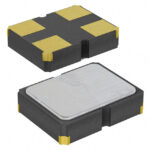 SG-9101CG-D40PGABB
The activity of extra discounts on wholesale prices is in full swing…
Please fill in your contact information and we will send you the latest wholesale price list.





