 ChipApex | Global Electronic Components Supplier
SEARCH
Search Product
Search Post
— IC芯片 | 连接器 | 传感器 | 被动器件 —
Search productSearch post
— IC芯片 | 连接器 | 传感器 | 被动器件 —
Consult the customer manager about the wholesale price.
consultation hotline:86-132-6715-2157
email:[email protected]
Contact the product manager for consultation. One-stop consultation is available.
Do you want a lower wholesale price? Please send us your inquiry and we will reply immediately.
The SG-9101CG-D40SGABA is a programmable crystal oscillator (XO) from the EPSON SG-9101CG series, featuring CMOS output and down-spread spectrum capabilities. It operates within a supply voltage range of 1.62V to 3.63V and supports frequencies from 670 kHz to 170 MHz. The device includes a standby function with a maximum disabled current of 3.7 mA. It utilizes a 4-SMD, no-lead package measuring 2.50mm x 2.00mm x 0.80mm. The unit is designed for an operating temperature range of -40°C to 85°C and offers a spread spectrum bandwidth of -4.00%. Frequency programming is performed by the distributor upon order.
This component is supplied as a blank oscillator programmed by the distributor based on specific customer requirements entered during the ordering process. Verification should focus on confirming the requested frequency falls within the 670 kHz to 170 MHz range. Ensure the application voltage aligns with the 1.62V to 3.63V specification. Confirm that the -40°C to 85°C temperature rating meets environmental needs. Check that the 4-SMD package dimensions fit the PCB layout constraints.
Select this model when a compact, programmable clock source with spread spectrum features is required. It is suitable for designs needing flexible frequency adjustment without custom hardware. Consider the CMOS output compatibility with downstream logic. Evaluate the standby current consumption against power budget requirements. Verify that the operating temperature range covers the intended deployment environment.
Part of the SG-9101Cx series of programmable spread spectrum crystal oscillators. Designed for applications demanding precise timing with reduced electromagnetic noise. Offers flexibility through post-manufacturing frequency programming. Utilizes standard surface-mount packaging for automated assembly. Complies with RoHS3 standards for environmental safety.
Verify pinout compatibility with existing PCB footprints. Ensure supply voltage and output logic levels match system requirements. Confirm temperature range adequacy for the new application context.
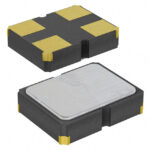 SG-9101CG-D40SGABA
The activity of extra discounts on wholesale prices is in full swing…
Please fill in your contact information and we will send you the latest wholesale price list.





