 ChipApex | Global Electronic Components Supplier
SEARCH
Search Product
Search Post
— IC芯片 | 连接器 | 传感器 | 被动器件 —
Search productSearch post
— IC芯片 | 连接器 | 传感器 | 被动器件 —
Consult the customer manager about the wholesale price.
consultation hotline:86-132-6715-2157
email:[email protected]
Contact the product manager for consultation. One-stop consultation is available.
Do you want a lower wholesale price? Please send us your inquiry and we will reply immediately.
The SG-9101CG-D40SHCCC is a programmable XO (standard) CMOS oscillator from the EPSON SG-9101Cx series. It operates within a frequency range of 670 kHz to 20 MHz and supports a supply voltage of 1.62V to 3.63V. The device features a standby function with a maximum disabled current of 3.7 mA. It utilizes a crystal as the basic resonator and employs downward spread spectrum modulation with a bandwidth of -4.00%. The component is housed in a 4-SMD, no-lead package measuring 2.50mm x 2.00mm x 0.80mm. It is rated for an operating temperature range of -40°C to 105°C and complies with RoHS3 specifications.
Verify the specific frequency requirement during the ordering process, as this model requires programming by the distributor or manufacturer based on customer input. Confirm that the 4-SMD no-lead package dimensions align with the target PCB footprint. Ensure the supply voltage range of 1.62V to 3.63V matches the system design constraints. Check for compliance with RoHS3 standards if required by project regulations.
Select this component when a precise, programmable frequency between 670 kHz and 20 MHz is needed in a compact surface-mount form factor. The downward spread spectrum feature makes it suitable for applications where electromagnetic interference reduction is a priority. Consider the wide operating temperature range for environments subject to thermal variation. The CMOS output ensures compatibility with standard digital logic interfaces.
This part belongs to the SG-9101Cx series of programmable spread spectrum crystal oscillators. It shares the same package outline and electrical characteristics with variants such as SG-9101CG-D40SHCCB, differing primarily in the specific frequency programming or suffix designation. The series is designed for applications requiring flexible frequency selection without maintaining multiple inventory SKUs for different frequencies.
The SG-9101CG-D40SHCCB is a confirmed substitute within the same series offering identical package and electrical parameters. Verify that the replacement part supports the required frequency range and spread spectrum configuration. Ensure the standby current and supply voltage specifications remain compatible with the existing circuit design.
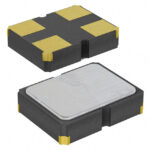 SG-9101CG-D40SHCCC
The activity of extra discounts on wholesale prices is in full swing…
Please fill in your contact information and we will send you the latest wholesale price list.




