 ChipApex | Global Electronic Components Supplier
SEARCH
Search Product
Search Post
— IC芯片 | 连接器 | 传感器 | 被动器件 —
Search productSearch post
— IC芯片 | 连接器 | 传感器 | 被动器件 —
Consult the customer manager about the wholesale price.
consultation hotline:86-132-6715-2157
email:[email protected]
Contact the product manager for consultation. One-stop consultation is available.
Do you want a lower wholesale price? Please send us your inquiry and we will reply immediately.
The SGR-8002DC-PTM is a programmable crystal oscillator manufactured by Epson, designed for standard clock applications. It operates within a frequency range of 1 MHz to 55 MHz and utilizes TTL output levels. The device supports voltage enable and disable functionality, providing control over power consumption and operational states. It is housed in an 8-DIP package with four leads, representing half the size of a standard DIP footprint. This component integrates PLL technology to achieve wide frequency outputs, ensuring reliable timing signals for electronic circuits requiring precise clock generation.
Verify that the ordering suffix PTM corresponds to the specific half-size 8-DIP package configuration required for your design. Confirm that the TTL output level matches your circuit's logic voltage requirements. Ensure the selected frequency falls within the 1 MHz to 55 MHz operational range. Check for RoHS compliance status if environmental regulations apply to your manufacturing process. Validate pinout compatibility with your PCB footprint before finalizing procurement.
Select this component when a programmable frequency solution is needed within the specified low-frequency range. Consider the half-size DIP package for through-hole mounting constraints where space is limited but leaded components are preferred. Evaluate the TTL output interface against your system's input requirements. The enable/disable feature offers flexibility for power management strategies. Verify that the stability specifications meet the timing accuracy demands of your application.
The SGR-8002 series represents Epson's line of programmable high-frequency crystal oscillators. These devices are engineered to provide flexible timing solutions using phase-locked loop technology. The SG-8002 family includes various package options and output types to suit different design needs. The SGR variant specifically denotes the DIP package configuration, distinguishing it from surface-mount alternatives within the same product family.
Cross-reference part numbers such as SG-8002DC variants with different suffixes to identify compatible packages or frequencies. Verify that substitute components maintain the same TTL output type and DIP form factor. Ensure any replacement supports the required enable/disable functionality. Check that the alternative device meets the same frequency and stability specifications. Confirm package dimensions match the existing PCB layout to avoid mechanical interference.
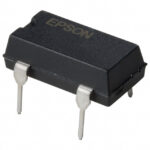 SGR-8002DC-PTM
The activity of extra discounts on wholesale prices is in full swing…
Please fill in your contact information and we will send you the latest wholesale price list.





