 ChipApex | Global Electronic Components Supplier
SEARCH
Search Product
Search Post
— IC芯片 | 连接器 | 传感器 | 被动器件 —
Search productSearch post
— IC芯片 | 连接器 | 传感器 | 被动器件 —
Consult the customer manager about the wholesale price.
consultation hotline:86-132-6715-2157
email:[email protected]
Contact the product manager for consultation. One-stop consultation is available.
Do you want a lower wholesale price? Please send us your inquiry and we will reply immediately.
The Si5315A-C-GM is a jitter-attenuating clock multiplier utilizing Skyworks DSPLL technology. It accepts dual differential clock inputs from 8 kHz to 644.53 MHz and generates two equal frequency-multiplied outputs within the same range. The device supports SyncE EEC options 1 and 2, providing ultra-low jitter generation of 0.23 ps RMS (1.875–20 MHz) and 0.47 ps RMS (12 kHz–20 MHz). It operates on a single supply voltage of 1.8 V, 2.5 V, or 3.3 V with a typical current draw of 25 mA at 2.5 V for LVPECL outputs. The component features programmable output formats including LVPECL, LVDS, CML, and CMOS, housed in a 6 x 6 mm 36-pin QFN package.
Verify the specific speed grade suffix (A vs B) when ordering, as performance parameters such as maximum output frequency and supply current differ between grades. Confirm the operating voltage requirements align with the selected speed grade specifications. Ensure proper handling procedures are followed due to moisture sensitivity classification.
Select the Si5315A variant for applications requiring output frequencies up to 644.53 MHz. Choose the Si5315B variant if the application requires a maximum output frequency of 125 MHz but offers lower power consumption. Verify that the external crystal or reference clock matches the required input frequency range of 8 kHz to 644.53 MHz.
This component belongs to the Si531x family of synchronous Ethernet and telecom jitter attenuating clock multipliers. It is designed to replace traditional solutions requiring external VCXOs and discrete loop filter components by integrating the DSPLL technology on-chip. The device simplifies system design by providing pin-controlled configuration for frequency plans and clock selection.
Public confirmed substitute part numbers are not available in the provided documentation.
The maximum output frequency for the Si5315A speed grade is 644.53 MHz.
No, the integrated DSPLL technology eliminates the need for external VCXO and loop filter components.
The Si5315 provides holdover capability to continue generating a stable output clock and triggers Loss of Signal (LOS) and Loss of Lock (LOL) alarms.
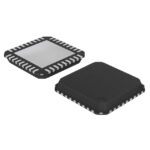 SI5315A-C-GM
The activity of extra discounts on wholesale prices is in full swing…
Please fill in your contact information and we will send you the latest wholesale price list.






