 ChipApex | Global Electronic Components Supplier
SEARCH
Search Product
Search Post
— IC芯片 | 连接器 | 传感器 | 被动器件 —
Search productSearch post
— IC芯片 | 连接器 | 传感器 | 被动器件 —
Consult the customer manager about the wholesale price.
consultation hotline:86-132-6715-2157
email:[email protected]
Contact the product manager for consultation. One-stop consultation is available.
Do you want a lower wholesale price? Please send us your inquiry and we will reply immediately.
The SI5338B-B08683-GM is an I2C-programmable quad clock generator utilizing MultiSynth technology. It synthesizes any frequency on four independent output drivers with zero ppm precision. The device supports differential and single-ended outputs, including LVPECL, LVDS, CML, HCSL, CMOS, SSTL, and HSTL formats. Maximum input frequencies reach 710 MHz via differential inputs. Key electrical parameters include a core supply voltage range of 1.71 V to 3.63 V, typical operating current of 45 mA, and typical phase jitter of 0.7 ps RMS. It operates within a temperature range of –40 °C to +85 °C in a 24-lead QFN package.
Verify the specific factory programming code associated with the B08683 suffix against the manufacturer's ordering documentation. This suffix indicates a custom configuration stored in non-volatile memory rather than a generic functional variant. Confirm that the required pinout and output configurations match the application design before procurement.
Select this component when independent frequency synthesis across multiple outputs is required without integer multiples constraints. Ensure the target output format (LVPECL, LVDS, etc.) and frequency range are supported by the specific driver configuration. Verify that the I2C interface voltage levels are compatible with the system controller. Consider the thermal resistance of the QFN-24 package for heat dissipation in dense layouts.
This part belongs to the Si5338 family of I2C-programmable clock generators from Skyworks Solutions. The family utilizes patented MultiSynth architecture to replace multiple discrete oscillators. The 'B' series typically denotes specific factory-programmed configurations or output driver capabilities within the broader Si5338 portfolio, distinguishing it from generic programmable variants.
Direct replacement requires verifying that the new component has identical factory-programmed NVM data or can be reprogrammed using ClockBuilder Pro software. Check for compatibility with existing PCB land patterns and pin assignments. Ensure the replacement supports the same output voltage levels and signal formats as the original design requirements.
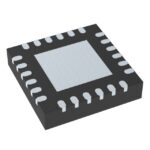 SI5338B-B08683-GM
The activity of extra discounts on wholesale prices is in full swing…
Please fill in your contact information and we will send you the latest wholesale price list.





