 ChipApex | Global Electronic Components Supplier
SEARCH
Search Product
Search Post
— IC芯片 | 连接器 | 传感器 | 被动器件 —
Search productSearch post
— IC芯片 | 连接器 | 传感器 | 被动器件 —
Consult the customer manager about the wholesale price.
consultation hotline:86-132-6715-2157
email:[email protected]
Contact the product manager for consultation. One-stop consultation is available.
Do you want a lower wholesale price? Please send us your inquiry and we will reply immediately.
The SiT3822AI-1C2-XXXX000.FP0000X is a high-performance differential programmable Voltage-Controlled Crystal Oscillator (VCXO) manufactured by SiTime. It utilizes MEMS technology to provide precise timing solutions in a compact surface-mount package. The device operates within a frequency range of 220 MHz to 625 MHz and supports LVPECL output configurations. It is designed for dual voltage supply inputs of 2.5V and 3.3V, ensuring compatibility with various system architectures. The unit features a total frequency stability of ±25ppm, making it suitable for applications requiring robust clock signals. This specific model is an unprogrammed blank intended for user configuration.
Verify the exact part number suffix to ensure correct packaging and programming status. Confirm that the application environment matches the specified temperature range and voltage requirements. Check for RoHS compliance documentation if required by regulatory standards. Ensure proper handling procedures are followed due to the surface-mount nature of the component. Validate that the supplier provides official datasheets and quality reports for traceability.
Choose this component when differential LVPECL outputs are required for noise immunity. Select based on the necessary frequency range between 220 MHz and 625 MHz. Consider the ±25ppm stability requirement for system synchronization needs. Evaluate the need for programmability versus fixed-frequency alternatives. Assess power supply constraints to confirm compatibility with 2.5V or 3.3V operation.
This part belongs to the SiT3822 series of programmable oscillators from SiTime. The series leverages MEMS technology to replace traditional quartz components. The 'AI' designation typically indicates industrial temperature range capabilities. The '1C2' suffix relates to specific package and pinout configurations. These devices are designed to offer superior reliability compared to conventional crystal oscillators.
Direct replacements may include other SiT3822 variants with different frequency ranges or output types. Cross-reference with SiT3821 models for lower frequency requirements. Verify pin compatibility and electrical specifications before substituting. Ensure the replacement maintains the required differential output format.
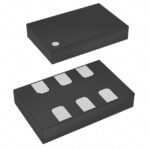 SIT3822AI-1C2-XXXX000.FP0000X
The activity of extra discounts on wholesale prices is in full swing…
Please fill in your contact information and we will send you the latest wholesale price list.





