 ChipApex | Global Electronic Components Supplier
SEARCH
Search Product
Search Post
— IC芯片 | 连接器 | 传感器 | 被动器件 —
Search productSearch post
— IC芯片 | 连接器 | 传感器 | 被动器件 —
Consult the customer manager about the wholesale price.
consultation hotline:86-132-6715-2157
email:[email protected]
Contact the product manager for consultation. One-stop consultation is available.
Do you want a lower wholesale price? Please send us your inquiry and we will reply immediately.
The Infineon SLB9655TT12FW432XUMA2 is a Trusted Platform Module (TPM) compliant with the TPM 2.0 specification, designed for secure cryptographic operations and identity management in computing systems. It integrates an ARM Cortex-M0+ processor core to execute security protocols and manage key storage within a tamper-resistant environment. The device supports standard interfaces including SPI and I2C for communication with host processors, ensuring compatibility with various platform architectures. It features hardware-accelerated support for common cryptographic algorithms such as RSA, ECC, AES, and SHA, providing efficient performance for authentication and data protection tasks while maintaining compliance with industry standards for system integrity.
Verify component authenticity through authorized Infineon distributors or direct channels. Confirm package type and marking codes match official datasheet specifications. Ensure supply chain documentation includes traceability records. Check for RoHS compliance status relevant to your manufacturing region. Validate that the specific suffix indicates the correct interface and packaging variant required for your design.
Select this component when TPM 2.0 compliance is mandatory for system certification. Consider the integrated processor capabilities if custom security policies are required. Evaluate interface compatibility with the target host controller before finalizing the design. Assess thermal requirements based on the intended operating environment and duty cycle of cryptographic operations.
This module belongs to Infineon's portfolio of security solutions aimed at enhancing endpoint protection. It complements other trusted computing components by offering a standardized approach to securing hardware roots of trust. The device is part of a broader ecosystem supporting secure identity and data protection across various computing segments.
Check for pin-compatible alternatives within the same TPM family that may offer updated firmware support or different interface options. Verify functional equivalence regarding supported cryptographic suites and compliance levels before substitution.
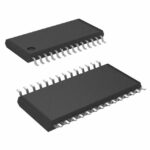 SLB9655TT12FW432XUMA2
The activity of extra discounts on wholesale prices is in full swing…
Please fill in your contact information and we will send you the latest wholesale price list.





