 ChipApex | Global Electronic Components Supplier
SEARCH
Search Product
Search Post
— IC芯片 | 连接器 | 传感器 | 被动器件 —
Search productSearch post
— IC芯片 | 连接器 | 传感器 | 被动器件 —
Consult the customer manager about the wholesale price.
consultation hotline:86-132-6715-2157
email:[email protected]
Contact the product manager for consultation. One-stop consultation is available.
Do you want a lower wholesale price? Please send us your inquiry and we will reply immediately.
The SMBT3906DW3T1G is a PNP bipolar junction transistor manufactured by onsemi, housed in a compact SOT-563 surface-mount package. This component features an internal dual-transistor configuration with common base connection, designed for high-speed switching and amplification applications. Key electrical specifications include a maximum collector-base voltage of -40V, a maximum collector-emitter voltage of -40V, and a continuous collector current rating of 200mA. The device operates within a temperature range of -55°C to +150°C, ensuring reliability in demanding environments while maintaining low saturation voltage characteristics.
Verify the complete part number including the suffix DW3T1G to ensure correct packaging and tape-and-reel quantity. Confirm that the SOT-563 footprint matches your PCB design constraints. Check the latest datasheet revision for any updates to thermal resistance or absolute maximum ratings before finalizing the bill of materials.
Select this component when space constraints require multiple PNP transistors in a minimal footprint. Ensure the application current does not exceed 200mA continuous. Verify that the required switching speed aligns with the device's transition frequency specifications. Consider thermal management requirements if operating near maximum power dissipation limits.
This part belongs to onsemi's SMBT series of small-signal transistors, which are widely used in consumer electronics and industrial control systems. The SOT-563 package allows for automated assembly and reduced board space compared to through-hole alternatives. It serves as a direct replacement for various legacy dual PNP transistor configurations in modern designs.
The SOT-563 package typically assigns Pin 1 to Base 1, Pin 2 to Emitter 1, Pin 3 to Common Base, Pin 4 to Emitter 2, Pin 5 to Collector 1, and Pin 6 to Collector 2, though specific pinouts should be verified against the official datasheet.
While it can handle small signals, it is primarily optimized for switching applications. For high-fidelity audio, devices with lower noise figures and higher linearity are generally preferred.
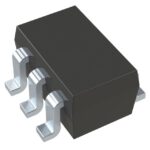 SMBT3906DW3T1G
The activity of extra discounts on wholesale prices is in full swing…
Please fill in your contact information and we will send you the latest wholesale price list.





