ChipApex | Global Electronic Components Supplier
SEARCH
Search Product
Search Post
— IC芯片 | 连接器 | 传感器 | 被动器件 —
Search productSearch post
— IC芯片 | 连接器 | 传感器 | 被动器件 —
Consult the customer manager about the wholesale price.
consultation hotline:86-132-6715-2157
email:[email protected]
Contact the product manager for consultation. One-stop consultation is available.
Do you want a lower wholesale price? Please send us your inquiry and we will reply immediately.
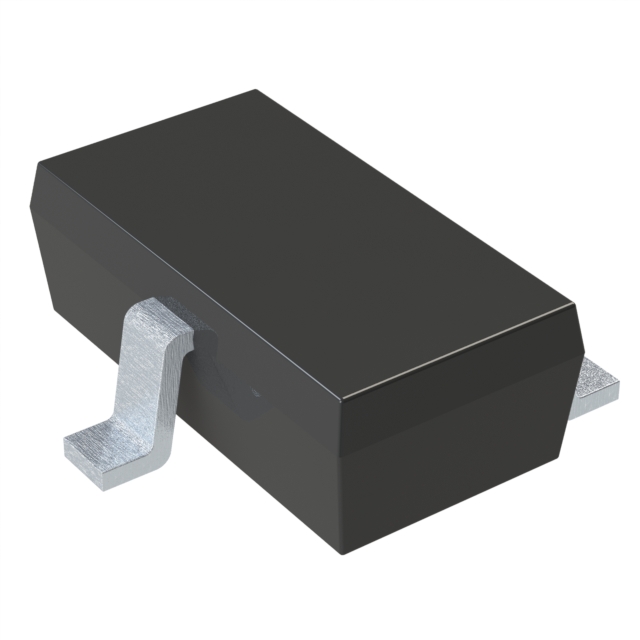
The SMUN2232T1G is a single NPN Digital Transistor (BRT) manufactured by onsemi, designed to replace discrete transistor and resistor networks. It integrates a monolithic bias network consisting of a series base resistor and a base-emitter resistor within a single device. The component features a collector-emitter maximum voltage of 50 V and a continuous collector current of 100 mA. Typical internal resistances are 4.7 kOhms for both the series base resistor and the base-emitter resistor. It operates within a temperature range of -55°C to +150°C and is housed in an SC-70-3 (SOT-323) surface-mount package.
Verify the specific suffix T1G to confirm the reel packaging configuration and ensure compliance with RoHS directives. Confirm the SC-70-3 package variant matches the target footprint requirements. Cross-reference the datasheet revision to validate electrical characteristics against the production batch. Ensure storage conditions adhere to moisture sensitivity level specifications prior to assembly.
Select this component when a compact NPN switching solution with integrated biasing is required. Compare the 4.7 kOhm typical resistance values against circuit drive requirements to ensure adequate base current. Verify that the 50 V collector-emitter voltage rating exceeds the maximum operating voltage. Consider the SC-70-3 package dimensions for spatial constraints in high-density layouts.
This part belongs to the MUN2232 family of digital transistors from onsemi. It shares functional similarities with other BRTs like the MUN2236T1G but differs in internal resistor ratios and gain characteristics. The SMUN prefix specifically denotes the SMD SC-70-3 package format, distinguishing it from through-hole or larger surface-mount variants within the same electrical specification family.
Publicly confirmed substitute part numbers include the MUN2232T1G and MMUN2232LT1G. These alternatives share identical electrical characteristics and pin configurations. Verify package compatibility and manufacturing source before substitution.
 SMUN2232T1G
The activity of extra discounts on wholesale prices is in full swing…
Please fill in your contact information and we will send you the latest wholesale price list.