 ChipApex | Global Electronic Components Supplier
SEARCH
Search Product
Search Post
— IC芯片 | 连接器 | 传感器 | 被动器件 —
Search productSearch post
— IC芯片 | 连接器 | 传感器 | 被动器件 —
Consult the customer manager about the wholesale price.
consultation hotline:86-132-6715-2157
email:[email protected]
Contact the product manager for consultation. One-stop consultation is available.
Do you want a lower wholesale price? Please send us your inquiry and we will reply immediately.
The SN74AHC573NSR is an octal transparent D-type latch manufactured by Texas Instruments. It operates within a supply voltage range of 2 V to 5.5 V and features eight non-inverting outputs. The device utilizes AHC logic technology, providing propagation delays of 14.5 ns and 8.8 ns under specified conditions. It draws a static current of 4 uA and supports low-level output currents of 32 mA and high-level output currents of -8 mA. Designed for surface-mount applications, it is housed in an SOIC-20 package and functions reliably across an operating temperature range from -40 C to +125 C.
Verify the specific suffix NSR against official Texas Instruments documentation to confirm the SOIC-20 package type and reel packaging configuration. Ensure compatibility with your board design regarding pinout and thermal requirements. Cross-reference the manufacturer part number with authorized distributors to confirm current availability status and authenticity before procurement.
Select this component when an octal latch with wide voltage flexibility is required. The AHC series offers improved speed compared to standard HC logic while maintaining CMOS compatibility. Consider the 2 V minimum supply voltage if designing for lower power applications. Verify that the SOIC-20 package fits your PCB footprint constraints and that the 125 C maximum junction temperature meets your environmental specifications.
This device belongs to the SN74AHC573 family of octal transparent D-type latches. It shares functional similarities with other members like the SN74HCT573 but differs in voltage range and speed characteristics. The AHC series is designed for high-speed applications requiring broad supply voltage support. It serves as a key component for managing parallel data flow in complex digital logic designs.
Check for direct replacements such as SN74AHC573DWR or SN74AHC573PW depending on preferred package style. Verify electrical parameters match exactly, particularly the 2 V to 5.5 V supply range and output drive capabilities. Ensure any substitute maintains the same pinout configuration to avoid redesigning the printed circuit board.
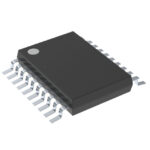 SN74AHC573NSR
The activity of extra discounts on wholesale prices is in full swing…
Please fill in your contact information and we will send you the latest wholesale price list.






