 ChipApex | Global Electronic Components Supplier
SEARCH
Search Product
Search Post
— IC芯片 | 连接器 | 传感器 | 被动器件 —
Search productSearch post
— IC芯片 | 连接器 | 传感器 | 被动器件 —
Consult the customer manager about the wholesale price.
consultation hotline:86-132-6715-2157
email:[email protected]
Contact the product manager for consultation. One-stop consultation is available.
Do you want a lower wholesale price? Please send us your inquiry and we will reply immediately.
The SN74AHCT132N is a quadruple positive-NAND gate with Schmitt-trigger inputs manufactured by Texas Instruments. It operates within a supply voltage range of 4.5 V to 5.5 V and supports an operating temperature range from -40 °C to +85 °C. The device features four independent NAND gates, each equipped with Schmitt-trigger functionality for noise immunity. It utilizes the AHCT logic family, ensuring compatibility with standard CMOS devices while accepting TTL-compatible input levels. The component is housed in a 14-pin DIP package.
Verify the specific datasheet revision corresponding to the SN74AHCT132N part number before procurement. Confirm that the required operating voltage matches the 4.5 V to 5.5 V specification. Ensure the package type aligns with the design requirements. Check for RoHS compliance status if environmental regulations apply to the final assembly. Cross-reference the manufacturer's latest documentation for any pinout or electrical characteristic updates.
Select this component when TTL-compatible logic levels are required alongside CMOS performance characteristics. The Schmitt-trigger inputs make it suitable for applications involving slow-rise signals or noisy environments. Verify that the 14-pin DIP package fits the available board space. Consider the power supply constraints, as the device requires a stable 5 V rail within the specified tolerance. Evaluate thermal management needs based on the ambient operating temperature range.
This component belongs to the SN74AHCT series of high-speed CMOS logic devices. The 'HCT' designation indicates compatibility with TTL input voltages while maintaining CMOS output characteristics. The 'A' prefix typically denotes advanced technology improvements over standard variants. This series is designed for general-purpose digital logic applications requiring reliable switching and noise immunity.
Compatible substitutes include SN74AHCT132DR (same function, tape-and-reel packaging) and SN74AHCT132PW (same function, TSSOP-14 package). Verify pin compatibility and electrical specifications before substitution. Ensure the alternative package type meets the physical layout constraints of the target application.
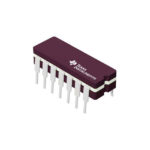 SN74AHCT132N
The activity of extra discounts on wholesale prices is in full swing…
Please fill in your contact information and we will send you the latest wholesale price list.





