 ChipApex | Global Electronic Components Supplier
SEARCH
Search Product
Search Post
— IC芯片 | 连接器 | 传感器 | 被动器件 —
Search productSearch post
— IC芯片 | 连接器 | 传感器 | 被动器件 —
Consult the customer manager about the wholesale price.
consultation hotline:86-132-6715-2157
email:[email protected]
Contact the product manager for consultation. One-stop consultation is available.
Do you want a lower wholesale price? Please send us your inquiry and we will reply immediately.
The SN74ALVCH162268KR is a 12-bit to 24-bit registered bus exchanger with 3-state outputs, manufactured by Texas Instruments. It operates from a supply voltage range of 1.65 V to 3.6 V and features a maximum propagation delay of 4.8 ns at 3.3 V. The device provides synchronous data exchange between two ports, utilizing internal registers that store data on the low-to-high transition of the clock input when appropriate clock-enable inputs are low. It supports bidirectional data flow control through active-low output enables.
Verify the specific package type and manufacturer part number against official documentation before procurement. Confirm RoHS compliance status and moisture sensitivity level requirements for your assembly process. Ensure that the ordering suffix matches the desired packaging format. Cross-reference the component datasheet for absolute maximum ratings to prevent damage during operation.
Select this component when designing systems that require bridging buses of different bit-widths with synchronous registration capabilities. Consider the operating voltage range and propagation delay specifications relative to your system's timing constraints. Evaluate the need for integrated series resistors in the B-port outputs to simplify PCB layout and reduce component count.
This device belongs to the Texas Instruments Widebus family of logic products. It is designed specifically for applications involving data transfer between buses of varying widths. The registered nature of the bus exchanger ensures stable data handling during transitions, making it suitable for complex digital systems requiring precise synchronization.
SN74ALVCH162268GR is a confirmed substitute part number available from Texas Instruments.
Data is stored in internal registers on the low-to-high transition of the clock input when the appropriate clock-enable inputs are low. The select line determines which input data is presented to the outputs.
The B-port outputs include equivalent series resistors designed to reduce overshoot and undershoot, eliminating the need for external resistors.
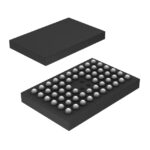 SN74ALVCH162268KR
The activity of extra discounts on wholesale prices is in full swing…
Please fill in your contact information and we will send you the latest wholesale price list.





