 ChipApex | Global Electronic Components Supplier
SEARCH
Search Product
Search Post
— IC芯片 | 连接器 | 传感器 | 被动器件 —
Search productSearch post
— IC芯片 | 连接器 | 传感器 | 被动器件 —
Consult the customer manager about the wholesale price.
consultation hotline:86-132-6715-2157
email:[email protected]
Contact the product manager for consultation. One-stop consultation is available.
Do you want a lower wholesale price? Please send us your inquiry and we will reply immediately.
The SN74AUC1G08 is a single 2-input positive-AND gate from the Texas Instruments AUC logic family. It operates within a supply voltage range of 0.8 V to 2.7 V, with specific optimization for 1.65-V to 1.95-V applications. The device supports mixed-mode signal operation through 3.6-V I/O tolerance while maintaining sub-1-V operability. Key electrical characteristics include a maximum propagation delay of 2.4 ns at 1.8 V and a maximum quiescent current of 10 µA. Output drive capability reaches ±8 mA at 1.8 V.
Verify the specific package type required for your design, as the SN74AUC1G08 is available in SOT-23, SC70, SOT-5X3, and DSBGA configurations. Confirm that the selected variant meets your thermal resistance and board space constraints. Ensure input pins are tied to valid logic levels during operation to maintain stability. Check the latest orderable addendum for current moisture sensitivity levels and reflow temperature profiles before finalizing procurement.
Select this component when designing low-voltage digital circuits requiring a compact AND gate solution. It is suitable for battery-powered portable electronics due to its low power consumption and wide operating voltage range. Consider the specific package dimensions if space is limited, as options like NanoFree provide minimal footprint. Ensure the application environment stays within the specified -40°C to +85°C temperature range for optimal performance.
This device belongs to the SN74AUC1G series, which focuses on ultra-low voltage and high-speed performance in small packages. The AUC family is designed to replace older logic families in modern low-power applications. The SN74AUC1G08 specifically provides a single 2-input AND function, making it a fundamental building block for complex digital logic designs in consumer and industrial electronics.
Direct replacements include other variants within the SN74AUC1G series or compatible parts from other manufacturers offering similar 2-input AND functionality in 5-pin packages. Verify pinout compatibility and electrical specifications such as propagation delay and output drive current. Ensure the substitute part supports the same supply voltage range and I/O tolerance requirements for seamless integration.
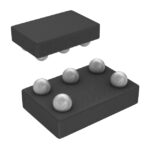 SN74AUC1G08YEAR
The activity of extra discounts on wholesale prices is in full swing…
Please fill in your contact information and we will send you the latest wholesale price list.




