 ChipApex | Global Electronic Components Supplier
SEARCH
Search Product
Search Post
— IC芯片 | 连接器 | 传感器 | 被动器件 —
Search productSearch post
— IC芯片 | 连接器 | 传感器 | 被动器件 —
Consult the customer manager about the wholesale price.
consultation hotline:86-132-6715-2157
email:[email protected]
Contact the product manager for consultation. One-stop consultation is available.
Do you want a lower wholesale price? Please send us your inquiry and we will reply immediately.
The SN74VMEH22501AGQLR is an 8-bit universal bus transceiver and two 1-bit bus transceivers with split LVTTL ports, feedback paths, and 3-state outputs. It operates at a supply voltage of 3.15 V to 3.45 V. The device supports a maximum clock frequency of 120 MHz. Propagation delays range from 1.4 ns to 14.5 ns depending on the port and direction. High-level output current is -48 mA for B-ports and -12 mA for A/Y-ports; low-level output current is 64 mA for B-ports and 12 mA for A/Y-ports. Operating temperature is -40°C to 85°C.
Verify that the specific suffix AGQLR corresponds to the VFBGA package type as listed in the ordering information. Confirm the manufacturer is Texas Instruments and check for RoHS compliance status. Ensure the component meets the required operating temperature range of -40°C to 85°C for your application environment before finalizing procurement.
Select this component when a single device must replace multiple standard logic functions such as transceivers, buffers, latches, and registered transceivers. It is suitable for designs requiring high drive capability on B-ports and feedback paths for diagnostics. Consider the VFBGA package if space constraints require a compact footprint compared to TSSOP options.
This part belongs to the SN74VMEH22501A family within Texas Instruments' Widebus Universal Bus Transceiver (UBT) line. It is designed for 3.3-V operation with 5-V tolerant inputs. The device integrates an 8-bit UBT transceiver with two integral 1-bit three-wire bus transceivers, offering a consolidated solution for complex bus architectures.
The SN74VMEH22501A is pin-for-pin compatible with the SN74VMEH22501 but offers a wider operating temperature range. It can functionally replace devices such as '245, '623, '645, '241, '244, '541, '543, '373, '573, '646, '652, '374, and '574.
BIAS VCC precharges and preconditions the B-port input/output connections, preventing disturbance of active data on the backplane during card insertion or removal.
It supports live insertion through Ioff circuitry which prevents damaging backflow current, power-up 3-state circuitry which places outputs in a high-impedance state during power transitions, and BIAS VCC circuitry.
Yes, the UBT transceiver allows data storage in latches or flip-flops on the low-to-high transition of CLKAB or CLKBA when the latch-enable (LE) input is low.
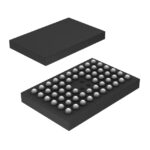 SN74VMEH22501AGQLR
The activity of extra discounts on wholesale prices is in full swing…
Please fill in your contact information and we will send you the latest wholesale price list.






