 ChipApex | Global Electronic Components Supplier
SEARCH
Search Product
Search Post
— IC芯片 | 连接器 | 传感器 | 被动器件 —
Search productSearch post
— IC芯片 | 连接器 | 传感器 | 被动器件 —
Consult the customer manager about the wholesale price.
consultation hotline:86-132-6715-2157
email:[email protected]
Contact the product manager for consultation. One-stop consultation is available.
Do you want a lower wholesale price? Please send us your inquiry and we will reply immediately.
The SSM2167-1RMZ-R2 is a low voltage microphone preamplifier with variable compression and noise gating manufactured by Analog Devices Inc. It operates on a single 3 V supply and features a shutdown current of less than 2 µA. The device provides an adjustable noise gate threshold, adjustable compression ratio, and an automatic limiting feature to prevent ADC overload. Audio specifications include 0.2% THD + N and a 20 kHz bandwidth. It is housed in a 10-lead MSOP package and guaranteed for operation over the extended industrial temperature range of −40°C to +85°C.
Verify the specific ordering suffix matches the required packaging format, such as REEL or R7, when sourcing the SSM2167-1RMZ variant. Confirm RoHS compliance status indicated by the Z suffix in the part number. Ensure the selected component meets the extended industrial temperature range requirements of −40°C to +85°C for your intended deployment environment.
Select this component for voice-band applications requiring optimized signal levels before digitization without additional digital domain gain adjustments. Consider the fixed rotation point of 63 mV rms and the ability to vary compression ratios from 1:1 to over 10:1 using a single external resistor. Evaluate the need for the low shutdown current feature if the design relies heavily on battery power conservation.
This component belongs to the SSM2167 family of audio signal processing integrated circuits designed by Analog Devices. It serves as a specialized solution for conditioning microphone inputs in personal electronics and computer audio systems. The device improves vocal clarity in communications and public address systems through its integrated dynamic range processing capabilities.
Public confirmed substitute part numbers are not available in the provided documentation.
The compression ratio is set by connecting a single external resistor (RCOMP) between Pin 8 and VDD. This allows the ratio to be varied from 1:1 to over 10:1 relative to the fixed rotation point.
Applying an active low, 0 V CMOS-compatible input to the SHUTDOWN pin (Pin 3) reduces the supply current to typically less than 2 µA. In this state, the input and output circuitry assume a high impedance state.
Signals above the rotation point are limited to prevent overload and eliminate popping. This automatic limiting feature prevents clipping of subsequent stages, such as codecs or ADCs.
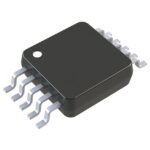 SSM2167-1RMZ-R2
The activity of extra discounts on wholesale prices is in full swing…
Please fill in your contact information and we will send you the latest wholesale price list.






