ChipApex | Global Electronic Components Supplier
SEARCH
Search Product
Search Post
— IC芯片 | 连接器 | 传感器 | 被动器件 —
Search productSearch post
— IC芯片 | 连接器 | 传感器 | 被动器件 —
Consult the customer manager about the wholesale price.
consultation hotline:86-132-6715-2157
email:[email protected]
Contact the product manager for consultation. One-stop consultation is available.
Do you want a lower wholesale price? Please send us your inquiry and we will reply immediately.
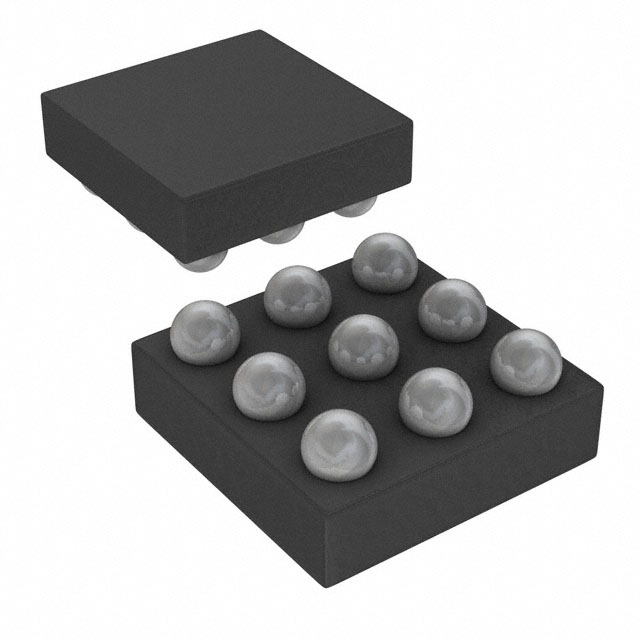
The SSM2537ACBZ-R7 is a PDM digital input, mono Class-D audio amplifier from Analog Devices. It delivers 2.7 W into a 4 Ω load and 1.4 W into an 8 Ω load at a 5.0 V supply with less than 1% THD+N. The device operates with a PVDD range of 2.5 V to 5.5 V and a VDD range of 1.65 V to 1.95 V. It supports 64× or 128× fS sampling rates, corresponding to 3 MHz and 6 MHz clocks. Efficiency reaches 93% into 8 Ω at full scale. The package is a 9-ball, 1.2 mm × 1.2 mm WLCSP.
Verify the specific revision level against the manufacturer's current documentation before finalizing designs. Confirm that the 9-ball WLCSP footprint matches the PCB layout guidelines provided in the datasheet. Ensure power supply sequencing adheres to the absolute maximum ratings to prevent damage. Check for RoHS compliance status if required by regional regulations.
Select this component when system noise immunity is critical, as digital transmission reduces susceptibility to interference. Choose based on the required output power relative to the available supply voltage. Consider the GAIN_FS pin configuration to optimize performance for either 3.6 V or 5 V operation. Evaluate the trade-off between latency and EMI modes based on application constraints.
This part belongs to the SSM2537 series of digital input Class-D amplifiers. It is designed to replace traditional DAC plus analog Class-D solutions by integrating the conversion process. The device targets applications requiring high efficiency and low power consumption while maintaining excellent audio fidelity.
SSM2537ACBZ-RL is a reel-packaged version of the same component.
The GAIN_FS pin sets the internal gain and filtering for different sample rates. It can be connected to PVDD or PGND, with or without a 47 kΩ resistor, to select between 3.6 V and 5 V gain settings and 64× or 128× fS operation.
The ultralow EMI mode is enabled by sending the PDM watermarking pattern 0xE1 to the device. This activates proprietary modulation technology to significantly reduce radiated emissions above 100 MHz.
 SSM2537ACBZ-R7
The activity of extra discounts on wholesale prices is in full swing…
Please fill in your contact information and we will send you the latest wholesale price list.