 ChipApex | Global Electronic Components Supplier

SEARCH
Search Product
Search Post
Search productSearch post
Consult the customer manager about the wholesale price.
consultation hotline:86-132-6715-2157
email:[email protected]
Contact the product manager for consultation. One-stop consultation is available.
Do you want a lower wholesale price? Please send us your inquiry and we will reply immediately.
ST60100D is listed in the Diode Arrays range at ChipApex. The manufacturer field lists Microchip Technology. Its product description is DIODE ARRAY GP 100V 20A TO204AA. Review the specifications below when checking this part for your BOM.
Request the manufacturer datasheet
Explore related parts through Rectifiers, Diodes, Discrete Semiconductor Products, all product categories.
No. The provided knowledge base does not list the ST60100D under Microchip Technology. It is a component manufactured by STMicroelectronics.
The provided source material contains no technical specifications, datasheets, or functional descriptions for the ST60100D.
Microchip Technology ST60100D is usually screened in Diode Arrays category against the released constraints that would be expensive to rediscover after build, such as rails, interfaces, thermal rise, or service access. Key specs include Description (DIODE ARRAY GP 100V 20A TO204AA), Packaging (Bulk), Temperature (-65°C ~ 175°C), Package/case (TO-204AA, TO-3), and Mounting (Through Hole).
What should I verify before using ST60100D in production?
Confirm footprint/pinout, min/max ratings, operating temperature, and the datasheet test conditions behind key specifications.
Which Speed is specified for ST60100D?
Standard Recovery >500ns, > 200mA (Io)
Which Diode Configuration is listed for ST60100D?
1 Pair Series Connection
What is the Current - Reverse Leakage @ Vr of ST60100D?
10 µA @ 1000 V
A practical check for Microchip Technology ST60100D in Diode Arrays is whether the electrical, thermal, interface, and service assumptions still hold once the part is on the released assembly. In production, the early application review usually stays on package/case (TO-204AA, TO-3), mounting (Through Hole), and temperature (-65°C ~ 175°C). High-voltage diode array modules are selected around reverse-voltage headroom, average and surge current, recovery behavior, leakage, and thermal path into the heatsink. They are often used for rectification and current steering where recovery behavior and leakage influence heat and noise in real operation. In practice, they often appear in power stages for rectification and polarity protection where predictable recovery and thermal margins matter. In real Diode Arrays work, approval usually depends on whether clamp waveform, placement, and heating stay inside released limits once the actual interface, load, and environment are attached.
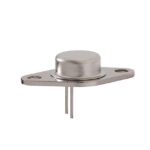 ST60100D

The activity of extra discounts on wholesale prices is in full swing…
Please fill in your contact information and we will send you the latest wholesale price list.





