 ChipApex | Global Electronic Components Supplier
SEARCH
Search Product
Search Post
— IC芯片 | 连接器 | 传感器 | 被动器件 —
Search productSearch post
— IC芯片 | 连接器 | 传感器 | 被动器件 —
Consult the customer manager about the wholesale price.
consultation hotline:86-132-6715-2157
email:[email protected]
Contact the product manager for consultation. One-stop consultation is available.
Do you want a lower wholesale price? Please send us your inquiry and we will reply immediately.
The STP08CP05MTR is a low-voltage, low-current power 8-bit shift register designed for LED panel displays. It integrates an 8-bit serial-in, parallel-out shift register feeding an 8-bit D-type storage register with eight regulated constant current sources providing 5-100 mA output. The device supports a 3 V to 5.5 V supply, operates at a 30 MHz clock frequency, and guarantees a 20 V output driving capability. It features ESD protection of 2.5 kV HBM and 200 V MM, and is available in a TSSOP-16 package.
Verify the specific suffix MTR indicates tape and reel packaging configuration. Confirm RoHS compliance status through official documentation. Ensure the operating temperature range aligns with system requirements. Check for moisture sensitivity level specifications relevant to surface mount assembly processes. Validate pinout compatibility with existing PCB layouts.
Select this component when designing LED display systems requiring low voltage operation down to 3 V. It is suitable for applications needing adjustable constant current outputs between 5 mA and 100 mA. Consider its thermal efficiency if using exposed pad packages. Ensure the 20 V output capability matches the series LED string voltage requirements. Verify interface compatibility with 3.3 V logic microcontrollers.
This part belongs to the STP08CP05 series of low-voltage, low-current power shift registers. It is functionally and footprint backward compatible with the STP8C/L596 series. The device is manufactured by STMicroelectronics and falls under the category of LED display drivers and logic ICs. It is designed to improve system performance through fast setup times and high clock frequencies.
STP8C/L596 is noted as a backward compatible alternative in functionality and footprint. Other parts in the STP08CP05 family may offer similar capabilities with different packaging or suffix variations. Verify electrical parameters and pinout compatibility before substitution.
The output current can be adjusted from 5 mA to 100 mA by connecting an external resistor.
The device supports a high clock frequency of 30 MHz to satisfy high-volume data transmission requirements.
Yes, users can adjust LED brightness intensity from 0% to 100% via the OE (Output Enable) pin.
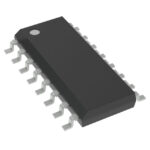 STP08CP05MTR
The activity of extra discounts on wholesale prices is in full swing…
Please fill in your contact information and we will send you the latest wholesale price list.





