 ChipApex | Global Electronic Components Supplier
SEARCH
Search Product
Search Post
— IC芯片 | 连接器 | 传感器 | 被动器件 —
Search productSearch post
— IC芯片 | 连接器 | 传感器 | 被动器件 —
Consult the customer manager about the wholesale price.
consultation hotline:86-132-6715-2157
email:[email protected]
Contact the product manager for consultation. One-stop consultation is available.
Do you want a lower wholesale price? Please send us your inquiry and we will reply immediately.
The STP1612PW05TTR is a low-voltage, 16-bit LED sink driver manufactured by STMicroelectronics. It features independent PWM control for each output channel, allowing precise brightness regulation without flicker. The device operates with a supply voltage range of 3V to 5.5V and delivers up to 100mA per channel. It utilizes a standard SPI-compatible serial interface for data input and includes diagnostic features such as open and short circuit detection on the LED outputs. The component is housed in a TSSOP-24 package.
Verify the specific suffix 'TTR' corresponds to the required tape and reel packaging configuration for automated assembly lines. Confirm that the TSSOP-24 pinout matches the target PCB footprint design. Ensure the operating temperature range meets the environmental requirements of the final application. Cross-reference the datasheet revision to confirm compatibility with existing firmware logic sequences.
Select this component when independent per-channel PWM control is required rather than global dimming. It is suitable for designs needing integrated fault detection to simplify system diagnostics. Consider the thermal performance of the TSSOP package for high-density layouts. Evaluate the power consumption against battery-operated constraints if applicable. Compare pin counts with alternative drivers if fewer channels are sufficient.
This part belongs to the STP16xx series of LED drivers from STMicroelectronics. It shares functional similarities with the STP16CPS05 but offers independent PWM control instead of global dimming. It serves as a direct replacement for legacy parts requiring 16-channel constant current sinking with digital control. The series is widely used in mid-range LED display applications.
The STEVAL-ILL028V1 evaluation board demonstrates the use of the STP1612PW05 variant. Designers may reference this platform for initial prototyping and firmware validation. No direct single-pin-to-pin substitute is confirmed in public documentation; verify electrical parameters before adopting alternatives.
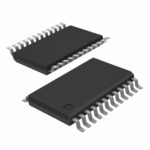 STP1612PW05TTR
The activity of extra discounts on wholesale prices is in full swing…
Please fill in your contact information and we will send you the latest wholesale price list.





