 ChipApex | Global Electronic Components Supplier
SEARCH
Search Product
Search Post
— IC芯片 | 连接器 | 传感器 | 被动器件 —
Search productSearch post
— IC芯片 | 连接器 | 传感器 | 被动器件 —
Consult the customer manager about the wholesale price.
consultation hotline:86-132-6715-2157
email:[email protected]
Contact the product manager for consultation. One-stop consultation is available.
Do you want a lower wholesale price? Please send us your inquiry and we will reply immediately.
The STP16DPS05TTR is a low-voltage, low-power 16-bit shift register designed for LED panel displays. It features a serial input and parallel output architecture with an integrated 16-bit D-type storage register. The device provides sixteen constant current sinks capable of delivering 20 mA to 100 mA per channel, regulated by an external resistor. It supports a supply voltage range of 3 V to 5.5 V, operates at clock frequencies up to 30 MHz, and includes open-circuit and short-circuit detection capabilities. The component is housed in a TSSOP-24 package.
Verify the specific suffix 'TTR' against the manufacturer's official datasheet to confirm the exact packaging configuration, such as cut tape or reel specifications. Ensure that the selected variant matches the required operating temperature range and RoHS compliance status for your specific manufacturing process. Cross-reference the ordering information with the latest STMicroelectronics documentation to avoid discrepancies in package type or moisture sensitivity levels.
Select this component when designing systems that require precise constant current regulation for multiple LEDs without external driver ICs. It is suitable for applications needing high brightness control through PWM or analog dimming via the OE/DM2 pin. Consider the 3V minimum supply voltage for compatibility with modern low-power logic families. Evaluate the thermal requirements of the TSSOP-24 package if driving currents approach the upper limit of the 100 mA specification.
This part belongs to the STP16DP series of LED display drivers from STMicroelectronics. It is functionally related to the STP16C/L596 but offers enhanced diagnostic features and improved thermal characteristics. The series is designed to replace older generation drivers while providing better integration for serial data handling and error detection in complex LED arrays.
Publicly confirmed substitute part numbers include STP16CPPS05XTTR and STP16DPPS05XTTR. Verify electrical compatibility and pinout alignment before substitution.
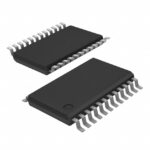 STP16DPS05TTR
The activity of extra discounts on wholesale prices is in full swing…
Please fill in your contact information and we will send you the latest wholesale price list.





