 ChipApex | Global Electronic Components Supplier

SEARCH
Search Product
Search Post
Search productSearch post
Consult the customer manager about the wholesale price.
consultation hotline:86-132-6715-2157
email:[email protected]
Contact the product manager for consultation. One-stop consultation is available.
Do you want a lower wholesale price? Please send us your inquiry and we will reply immediately.
STPSC1206D is listed in the Single Diodes range at ChipApex. The manufacturer field lists STMicroelectronics. Its product description is DIODE SIL CARB 600V 12A TO220AC. Review the specifications below when checking this part for your BOM.
The STPSC1206D is a silicon carbide (SiC) power Schottky diode manufactured by STMicroelectronics. It features a 650 V repetitive peak reverse voltage rating and an average forward current of 12 A. The device utilizes a wide bandgap SiC substrate to achieve high-performance rectification with negligible reverse recovery charge. Key electrical parameters include a maximum forward voltage of 1.3 V at rated current and a low reverse leakage current of 15 µA. It operates within a junction temperature range of -40 °C to +175 °C and supports a forward surge current of 50 A, ensuring robustness during transient conditions.
Verify the specific suffix against official documentation, as variations may exist between standard and automotive grades. Confirm package type compatibility, such as TO-220AC-2 or D²PAK, depending on the exact variant ordered. Ensure design requirements align with the 650 V rating and thermal management needs for operation up to 175 °C. Cross-reference datasheet revisions to confirm pinout and mechanical dimensions match the intended PCB layout.
Select this component for applications requiring high efficiency in hard-switching environments where minimal reverse recovery losses are critical. The SiC technology offers superior performance compared to silicon alternatives at high temperatures. Consider the 12 A current rating and 650 V blocking capability when designing PFC stages or boost converters. Evaluate thermal dissipation requirements given the 1.3 V forward voltage drop at full load.
The STPSC1206D belongs to the STPSC series of silicon carbide power Schottky diodes from STMicroelectronics. This series is designed to leverage the wide bandgap properties of SiC for high-voltage, high-temperature applications. The product line targets efficient power conversion in demanding industrial and automotive electronics, offering improved system size and performance over traditional silicon rectifiers.
Public confirmed substitute part numbers were not identified in the provided source material.
Explore related parts through Rectifiers, Diodes, Discrete Semiconductor Products, all product categories.
 STPSC1206D

The activity of extra discounts on wholesale prices is in full swing…
Please fill in your contact information and we will send you the latest wholesale price list.
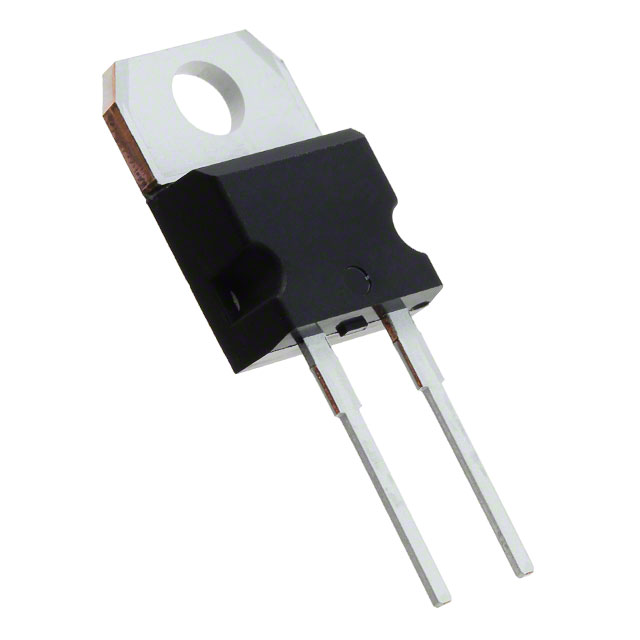







Request a quote for STPSC1206D