 ChipApex | Global Electronic Components Supplier
SEARCH
Search Product
Search Post
— IC芯片 | 连接器 | 传感器 | 被动器件 —
Search productSearch post
— IC芯片 | 连接器 | 传感器 | 被动器件 —
Consult the customer manager about the wholesale price.
consultation hotline:86-132-6715-2157
email:[email protected]
Contact the product manager for consultation. One-stop consultation is available.
Do you want a lower wholesale price? Please send us your inquiry and we will reply immediately.
The STSPIN32F0ATR is a system-in-package advanced BLDC controller featuring an embedded STM32 MCU. It integrates three half-bridge gate drivers with 600 mA sink/source current capability for driving power MOSFETs or IGBTs. The device operates within an extended voltage range of 8 V to 45 V and includes internal 3.3 V DC/DC and 12 V LDO regulators. Key features include a 32-bit ARM Cortex-M0 core up to 48 MHz, 32 kByte Flash, 4 kByte SRAM, four rail-to-rail op-amps, and a programmable comparator for overcurrent protection. It supports FOC and 6-step sensorless algorithms.
Verify the suffix 'ATR' indicates tape-and-reel packaging configuration. Confirm the specific temperature grade and memory option bytes match project requirements. Ensure compatibility with the target PCB footprint, typically VFQFPN-48. Validate that the 8 V to 45 V operating range aligns with the system power supply design.
Select this component for applications requiring high integration of motor control logic and power stage in a compact form factor. The embedded STM32F031C6 allows for advanced algorithms like Field Oriented Control (FOC) without external microcontrollers. Consider the 600 mA driver current limit when sizing external MOSFETs. The wide operating voltage range suits battery-powered and mains-connected appliances.
The STSPIN32F0 series represents a family of highly integrated BLDC controllers designed to reduce PCB area and bill-of-materials. The STSPIN32F0 variant specifically targets lower voltage applications (up to 45 V) compared to higher voltage siblings like the STSPIN32F025x or STSPIN32F060x. It combines the power stage, gate drivers, and MCU into a single package.
Direct pin-compatible replacements within the same voltage class are limited due to the specific MCU integration. Higher voltage variants such as STSPIN32F0252 or STSPIN32F0601 offer similar MCU cores but differ significantly in voltage ratings and driver currents, requiring circuit redesign. Generic BLDC controllers lacking embedded MCUs require significant firmware development effort.
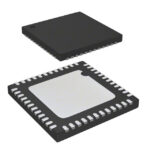 STSPIN32F0ATR
The activity of extra discounts on wholesale prices is in full swing…
Please fill in your contact information and we will send you the latest wholesale price list.






