ChipApex | Global Electronic Components Supplier
SEARCH
Search Product
Search Post
— IC芯片 | 连接器 | 传感器 | 被动器件 —
Search productSearch post
— IC芯片 | 连接器 | 传感器 | 被动器件 —
Consult the customer manager about the wholesale price.
consultation hotline:86-132-6715-2157
email:[email protected]
Contact the product manager for consultation. One-stop consultation is available.
Do you want a lower wholesale price? Please send us your inquiry and we will reply immediately.
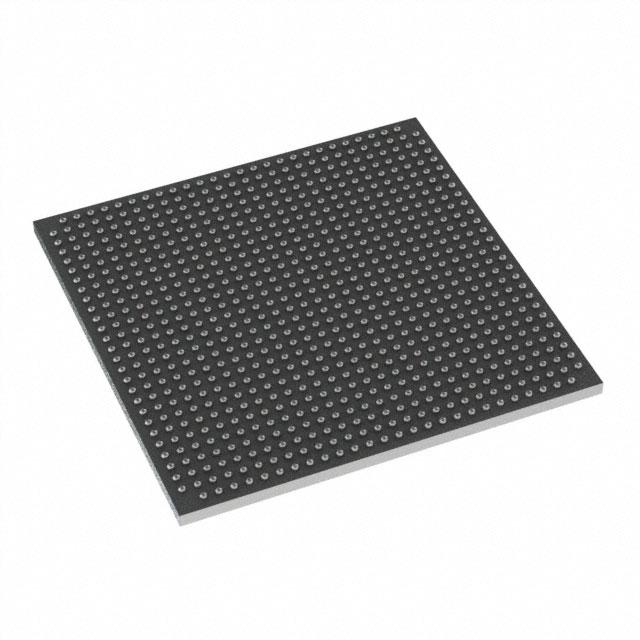
The T1024NSE7KQPA is a QorIQ Power Architecture microprocessor featuring dual e5500 cores operating at 1.0 GHz within a 64-bit architecture. It utilizes an FCPBGA-780 package with dimensions of 23x23 mm and supports DDR3L/4 SDRAM interfaces. The device includes integrated hardware acceleration for security (SEC) and packet processing (DPAA), alongside high-speed SerDes channels supporting PCIe and Ethernet up to 10 Gbps. Designed for industrial applications, it operates across a temperature range of 0°C to +105°C.
Verify the specific suffix 'NSE' against official NXP documentation to confirm the exact temperature grade and feature set, as suffixes define critical operational parameters. Ensure compliance with export regulations if applicable, as some NXP components require authorization for international shipment. Cross-reference the datasheet revision to validate pin compatibility and electrical specifications before finalizing procurement orders.
Select this component when a balance of processing power and energy efficiency is required for industrial communication gateways. The dual-core configuration offers sufficient throughput for complex protocol stacks while maintaining lower power consumption compared to higher-core-count alternatives. Verify that the system memory interface requirements align with the supported DDR3L/4 standards and that the package footprint fits the target PCB layout constraints.
This part belongs to the NXP QorIQ T-Series family, designed for cost-effective and power-efficient networking solutions. It serves as a scalable option within the platform, offering software compatibility with higher-end models like the T1042 and T2081. This allows designers to migrate designs across the product line while leveraging existing codebases and peripheral configurations.
The T1024NXE7KQA is a confirmed substitute variant within the same series, differing primarily in its extended industrial temperature range (-40°C to +105°C). Designers should verify thermal management requirements to determine if the wider temperature range is necessary or if the standard 0°C to +105C rating suffices for the application environment.
 T1024NSE7KQPA
The activity of extra discounts on wholesale prices is in full swing…
Please fill in your contact information and we will send you the latest wholesale price list.